
Unlocking Solo Ads: A Friendly Guide to Email Marketing
What Is a Solo Ad and How It Works — The Complete Guide to Solo Ad Marketing & Traffic
A solo ad is a paid email send an established list owner delivers on your behalf to drive focused traffic and capture leads via an opt‑in or direct offer. This guide walks through what solo ads do, how they function as a paid traffic channel, and why affiliate marketers and list builders rely on them to speed up lead generation. When other channels are slow, expensive to test, or deliver poor-quality visitors, a well-executed solo ad can validate an offer quickly and help you build segmented, monetizable lists. You’ll find clear definitions, a step‑by‑step campaign workflow, vendor vetting questions, 2025 pricing and CPC benchmarks, landing page and email swipe optimizations, niches that convert, scam‑avoidance tactics, and deliverability trends. Practical checklists, templates, comparison tables, and vendor questions are included so you can buy solo ads with confidence and measure ROI in today’s market.
What Is a Solo Ad? Core Components and How It Differs from Other Traffic
Put simply, a solo ad is a single email blast a list owner sends to their permissioned subscribers for an advertiser, designed to generate clicks, opt‑ins, or immediate sales. It works because the list owner already has a topical, permissioned audience and can segment by interest, geography, or engagement—so responses often come faster than from many other channels. Solo ads differ from PPC and social in format (email vs. ad unit), pricing (usually per click or fixed click packages rather than auction bids), and speed of intent—you can see opt‑ins within hours of a send. For advertisers the main pieces are the list owner (seller), the advertiser (buyer), the email creative or swipe, the tracking link/redirect, and the landing page or opt‑in form that receives the traffic. Understanding these parts makes it easier to compare risk, cost, and expected outcomes versus display, search, or paid social. Next, we’ll break down the terminology you’ll use when planning and buying solo ads.
What Does Solo Ad Marketing Mean? Key Terms You Need
Solo ad marketing means buying dedicated email sends to a curated subscriber list to drive clicks, opt‑ins, or sales for a specific offer—performance is usually tracked by unique clicks and downstream conversion rates. Important terms: “unique clicks” (distinct visitors who click the tracking link), “Tier 1” (high-value countries such as the US, Canada, UK, Europe, Australia, New Zealand), “opt‑in page” (where visitors subscribe), and “email swipe” (the prewritten email copy supplied to the list owner). List quality beats list size: fresh, engaged lists convert much better, while stale or bot‑filled lists inflate click totals without real leads. Reliable campaigns track click timestamps, geographic breakdowns, and opt‑in rates so you can calculate CPA and test creatives. Knowing these terms helps you vet vendors and set realistic ROI expectations.
How Do Solo Ads Stack Up Against PPC and Social?
Solo ads offer a different trade‑off than PPC and social. While PPC and social use auctioned placements and broad audience signals, solo ads leverage a list owner’s first‑party relationship with subscribers and are usually priced per click or per package—which can be cheaper for early funnel testing when list quality is high. Speed is a major advantage: a single solo send can generate hundreds or thousands of clicks and opt‑ins in 24–72 hours, whereas organic social and some paid channels often need longer to learn and scale. Solo ads excel at quick list building, lead magnets, and funnel validation; PPC and paid social are typically better for scalable, intent‑driven conversions and audience controls. Match the channel to your funnel stage: use solo ads early for fast testing and list growth, then layer PPC and social for scale and retargeting.
How Do Solo Ads Work? A Step‑by‑Step Campaign Workflow
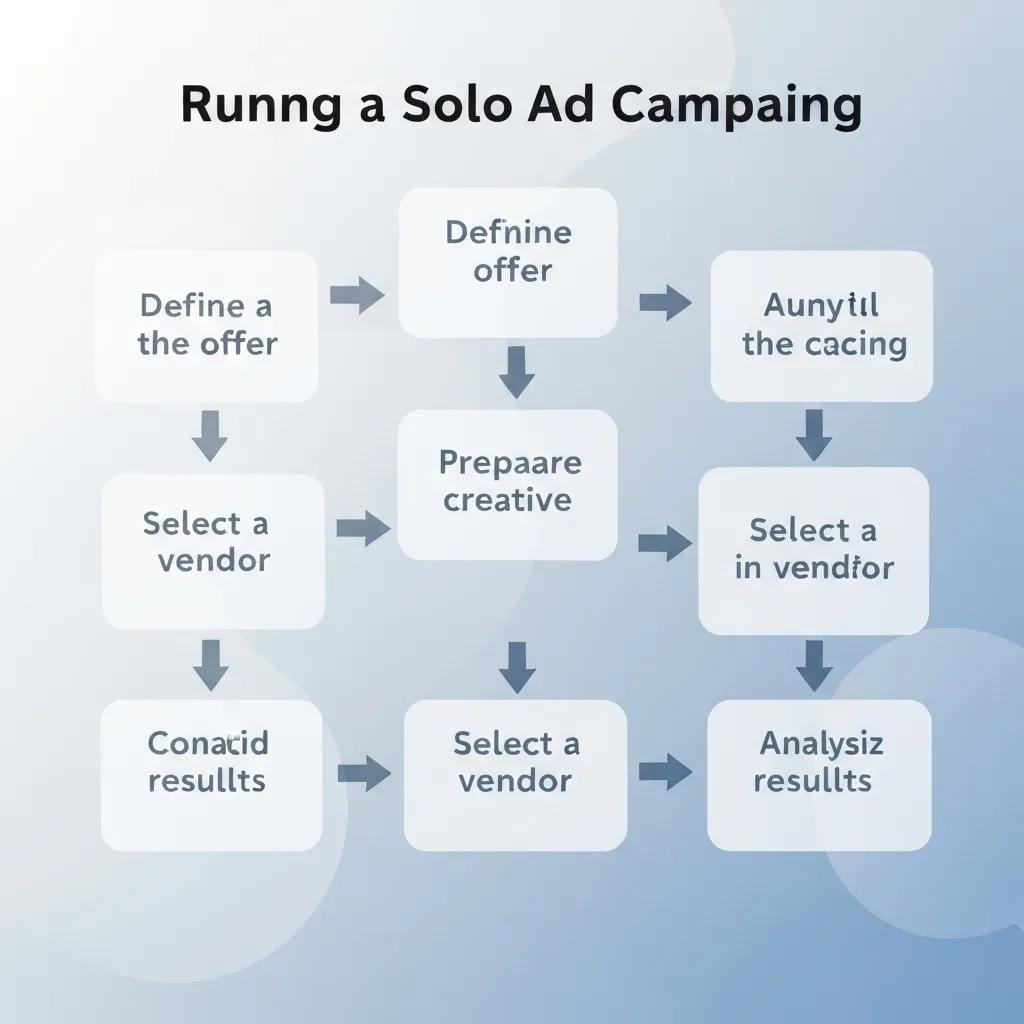
Solo ad campaigns follow a straightforward sequence: define the offer and target, set up tracking and creative, pick and vet a vendor, run a test batch, analyze results, and then scale or iterate based on data. Mechanically, the list owner sends the advertiser’s email (or their version of it) to a permissioned subscriber base; subscribers click the tracking link and land on an opt‑in or sales page where conversions are recorded. Track metrics like unique clicks, CTR, opt‑in rate, downstream conversion rate, and CPA so you can compute ROAS and decide whether to scale. This phased approach minimizes risk—start with proof‑of‑concept buys, maintain clear tracking, and optimize landing pages and follow‑ups immediately. The table below turns that workflow into clear actions and deliverables you can follow from brief to evaluation.
| Step | Action Items | Deliverable |
|---|---|---|
| 1. Offer Definition | Define target, core value prop, lead magnet or offer and target geography | Offer brief and KPI targets |
| 2. Creative & Tracking | Create email swipe, UTM parameters, tracking redirect, and landing page | Swipe file, tracking links, landing page URL |
| 3. Vendor Selection | Vet list owner for traffic proof, tier breakdown, and tracking access | Vendor checklist & agreement |
| 4. Test Send | Purchase small initial package, monitor live tracking and delivery window | Click logs, timestamps, geo data |
| 5. Analyze Results | Calculate opt-in rate, CPA, and conversion percentages | Performance report with next-step recommendation |
| 6. Scale or Iterate | Adjust creative, split-test pages, increase spend on winners | Scaled campaign plan or pivot notes |
This checklist sets clear expectations at each phase and gives you a repeatable playbook for running solo ad tests that produce verifiable results. Next, we cover how to find and rigorously vet trustworthy solo ad vendors so your test sends deliver real human traffic.
How to Find and Vet Reliable Solo Ad Vendors (Including Wholesale Premium Traffic)
Finding dependable vendors means using a short but strict vetting checklist: check list freshness, request click logs with timestamps and geographic breakdowns, confirm delivery guarantees, and insist on transparent tracking. Ask for sample tracking access during the send and clear statements on list segmentation (niche, engagement, Tier 1 percentage). Red flags: vague metrics, refusal to share logs, no documented delivery windows, or unverifiable testimonials. Wholesale Premium Traffic aligns with buyer priorities by emphasizing claims like 100% real human traffic, guaranteed click delivery, tiered traffic options with Tier 1 breakdowns, and fast delivery with live tracking—exactly the items you should validate during vetting.
Intent: Encourage readers to explore our services
Essential Elements of a High‑Performing Solo Ad Campaign

Top solo ad campaigns combine a clear offer, a concise email swipe with a strong subject and single CTA, a mobile‑optimized opt‑in or sales page, and an automated follow‑up sequence that monetizes or nurtures new subscribers. Your swipe should open with a benefit‑driven subject and send traffic to a tightly focused landing page with one conversion goal. Landing pages must load quickly, mirror the email promise, and show social proof with a short, easy form—headline clarity and minimal distractions improve conversions. Follow‑up sequences (3–5 messages) should be ready to segment and monetize new leads. When these elements work together, clicks convert into measurable opt‑ins and revenue. The next section shows why solo ads are especially useful for list building and fast lead acquisition.
Why Use Solo Ads? The Benefits for Lead Generation and List Building
Solo ads deliver four core advantages: fast lead acquisition, topic‑aligned traffic, low‑friction testing, and straightforward scalability. A single send can produce actionable opt‑in data within 24–72 hours, speeding decision making. When list relevance and Tier 1 targeting match your offer, opt‑in and conversion rates tend to be higher, helping CPA. Small test packages lower testing costs so you can validate hooks and landing pages before committing bigger budgets. Finally, successful sends are easy to scale or repeat, letting you roll winning creatives into larger buys. Together, those characteristics make solo ads a strong complement to PPC and social for list building and affiliate funnels.
| Benefit | Why It Matters | Expected Outcome / Metric |
|---|---|---|
| Speed to Leads | Immediate audience exposure from one send | Opt-ins within 24–72 hours |
| Targeted Reach | Niche‑aligned lists deliver relevant prospects | Higher opt-in and conversion rates |
| Low-Cost Testing | Small packages allow rapid proof‑of‑concept | Reduced CPA for initial tests |
| Scalable Wins | Successful sends can be scaled or repeated | Improved ROI as CPA stabilizes |
This table translates those benefits into measurable planning metrics so you can set realistic goals. Next, we’ll explain how targeted solo traffic directly improves conversion performance.
Intent: Encourage readers to explore our services
How Targeted Solo Traffic Raises Conversion Rates
Targeted traffic improves conversions by aligning subscriber intent and list topicality with your offer, reducing friction between the email promise and landing page. A relevant Tier 1 list typically converts at a higher click‑to‑opt‑in rate than untargeted sources, lowering CPA. Example math: a 1,000‑click solo send to a relevant Tier 1 list at a 20% opt‑in rate yields 200 leads; with a 5% downstream conversion to a $50 offer, that’s 10 buyers—numbers you can use to calculate realistic CPAs. Matching audience relevance and preserving list freshness are the biggest levers for campaign economics and scaling decisions. Below we highlight vendor value props that help reduce buyer risk.
What Sets Wholesale Premium Traffic’s Solo Ads Apart?
Wholesale Premium Traffic highlights buyer‑focused attributes buyers care about: claims such as “100% Real Human Traffic Always” and “Guaranteed Click Delivery” (with frequent over‑delivery), tiered packages offering ‘Unique Clicks’ with 80% Tier 1, and ‘Tier 1 Only Clicks’ (100% Tier 1 across specified countries). Their packages are priced competitively—cited at $0.32–$0.50 per click—with campaign starts typically within 24–72 hours, plus live tracking and optional landing page assessment. Those features address common buyer concerns—bot traffic, geographic targeting, timing, and post‑click readiness—and can materially improve your odds of reaching target opt‑in rates. Still, always request click logs, tracking access, and written guarantees when evaluating any vendor.
Intent: Encourage readers to explore our services
Solo Ad Costs: Pricing Models and CPC Analysis
Solo ads are usually sold per click or in fixed click packages. Price drivers include Tier 1 targeting, list freshness, niche specificity, and guarantees; in 2025, tighter deliverability and higher demand for Tier 1 clicks have pushed some market averages up. Mid‑2025 benchmarks show quality Tier 1 clicks commanding a premium versus lower‑tier traffic. Wholesale Premium Traffic’s cited range of $0.32–$0.50 per click is competitive when you verify the stated Tier 1 percentages and replacement policies. Vendors package traffic differently—bulk click blocks, bundled sends with over‑delivery, or premium geographic exclusives—so align package selection with your CPA goals. The table below summarizes common package types, CPC ranges, delivery windows, and targeting guarantees to help compare offers objectively.
| Package Type | CPC Range (2025) | Delivery Window | Targeting / Guarantee |
|---|---|---|---|
| Tier 1 Mixed | $0.90 – $1.50 | 24–72 hours | Higher CPC, broader Tier 1 mix |
| Competitive Tiered | $0.32 – $0.50 | 24–72 hours | Competitive CPC with stated Tier 1 % |
| Premium US Only | $1.20 – $2.00 | 24–72 hours | 100% US traffic guarantee |
| Bulk Click Blocks | $0.40 – $1.00 | Staggered delivery | Volume discounts; varying freshness |
Advertised CPCs vary widely by targeting and guarantees—choose the package that matches your campaign goals and acceptable CPA. The short note below helps guide package selection.
Intent: Encourage readers to explore our services
Competitive Solo Ad Rates in 2025
In 2025, demand for validated Tier 1 clicks and stronger inbox filtering have pushed some CPCs higher. Price is driven by the percentage of Tier 1 clicks, list freshness, niche specialization, and any delivery guarantees. Pure Tier 1 (US‑only) traffic commands the highest CPCs; tiered packages with stated Tier 1 percentages sit in the middle. The ranges above—up to the Wholesale Premium Traffic example of $0.32–$0.50 per click—are directional; always verify geographic breakdowns and request timestamped click logs before buying.
Picking the Right Package for Your Goals
Match package size to campaign stage: start with a small test package to validate the offer and landing page, then scale once CPA and opt‑in benchmarks are met. A practical rule: test with 250–1,000 clicks depending on budget and statistical needs, measure opt‑ins and downstream conversions, and only increase spend when CPA goals are consistent. Example math: if your target CPA per lead is $10 and you expect a 10% opt‑in rate at $0.50 CPC, a 1,000‑click test costs $500 and should yield ~100 leads (a $5 acquisition cost before downstream sales). Confirm delivery windows, over‑delivery terms, and replacement policies in writing to protect against underperformance. After you choose a package, creative and landing page optimization determine whether you hit your ROI targets.
How to Optimize Solo Ad Campaigns for Maximum ROI: Landing Pages, Email Swipes & Follow‑Up
Optimization rests on three pillars: the email swipe (subject and body), the landing page (speed and clarity), and the follow‑up sequence (nurture and segmentation). A tightly written swipe with a compelling subject and a single CTA boosts CTR; the email must align with the landing page to prevent drop‑off. Landing pages should be lightweight, mobile‑first, and headline‑aligned with the email promise; fast load times, above‑the‑fold opt‑in, and a single conversion focus increase opt‑in rates. Automate a 3–5 email follow‑up sequence to segment and monetize new subscribers—use value, social proof, and urgency to move prospects further down the funnel. Together, precise swipes, conversion‑focused pages, and smart follow‑ups lower CPA and clarify scale decisions.
Intro: Use these practical checklists to lift conversion rates fast.
Checklist:
- Match subject lines to landing page headlines for consistent messaging and fewer drop‑offs.
- Use a single clear CTA in the email that points to a focused landing page with one conversion goal.
- Keep landing page load time under 3 seconds to reduce mobile abandonment.
- Ask for only one or minimal form fields to boost opt‑in rates.
- Deploy a 3–5 message follow‑up sequence that segments by click and opt‑in behavior.
Apply this checklist to turn initial clicks into reliable, actionable leads. The next subsection covers landing page best practices and A/B tests that produce incremental lifts.
Landing Page Best Practices for Solo Ads
High‑converting landing pages use a single, benefit‑led headline, immediate social proof, and a simple form above the fold—clarity and speed beat complexity. Make sure the page’s value proposition reflects the email promise to avoid cognitive dissonance, and test headline variants, CTA copy, and image use. Run A/B tests with small, incremental changes—headline, button copy, form length, and trust elements—and measure opt‑in rate and cost per lead, not vanity metrics. Also prioritize mobile‑first design, minimize third‑party scripts that slow pages, and include clear privacy language near the form to build trust and compliance. These choices lead to better downstream performance and more predictable scaling.
How to Write Email Swipes and High‑Impact Follow‑Up Sequences
A converting email swipe follows a tight structure: a subject that promises a benefit, short preview text that sparks curiosity, a body of 2–4 short paragraphs explaining the value, and one clear CTA with tracking. Use personalization tokens only if supported by the list owner, and always send recipients to a landing page that fulfills the subject’s promise. For follow‑ups, use a three‑step cadence: a welcome/value email within minutes, an educational or social‑proof email 1–2 days later, and an urgency or offer email on day 4–7 for non‑converters. Monitor deliverability and sender reputation—warm sending domains, authenticate mail streams (SPF/DKIM), and encourage real replies to improve inbox placement.
Top Niches and Use Cases for Solo Ads in 2025
Solo ads typically perform best in niches with strong subscriber intent: business opportunities, Make Money Online (MMO), CPA lead‑gen, information products, and some health or self‑improvement verticals. These audiences have already opted into topical feeds and are more likely to engage with relevant offers. In 2025, niche fit matters more than ever because deliverability and filtering favor clear relevance and good domain reputation. Low‑friction offers—email courses, free reports, or webinars—tend to produce higher opt‑in rates than direct purchase pitches in solo ad funnels. The next section outlines affiliate niches with historical strength and how to adapt offers by vertical.
Affiliate Niches That Typically Perform Well with Solo Ads
Affiliate verticals that often convert with solo ads include business opportunity offers, CPA lead‑gen (insurance, credit checks), and high‑value information products where the list topic closely matches the offer. Prioritize niche fit—an MMO audience will respond better to entrepreneurial offers than to unrelated e‑commerce pitches. Use lead magnets or low‑friction tripwires to capture email addresses before pushing higher‑ticket sales. Always test with small sends using simple lead magnets to measure opt‑in rates, then upsell with segmented follow‑ups.
Using Solo Ads to Build Lists in Make Money Online Niches
In MMO niches, solo ads accelerate list growth by exposing offers to subscribers already primed for business and income content. Effective lead magnets for this audience include quick‑win tutorials, funnel blueprints, or toolkits. Nurture new subscribers with targeted sequences that move them from free content to product or affiliate offers, and track engagement to segment and retarget high‑intent users. Treat early solo‑ad leads as long‑term assets—consistent value delivery and relevant offers are the path to sustainable monetization, not one‑time conversions.
Risks and Challenges of Solo Ads — How to Avoid Scams and Protect Quality
Main risks include bot‑generated clicks, misreported geography, stale lists with low engagement, and vendors who refuse to verify tracking—these inflate apparent performance without delivering real leads. Watch for red flags: no tracking access, absent timestamped click logs, refusal to specify Tier 1 percentages, or vague replacement/refund terms. Protect yourself with small test buys, UTM‑tagged tracking plus third‑party analytics, geographic breakdown requests, and written agreements on guaranteed delivery and remediation. Vendors who offer live tracking, prompt delivery windows, and landing page assessments reduce many of these risks through transparency and aligned incentives. The next section gives concrete vetting steps and how to evaluate vendor claims operationally.
How Wholesale Premium Traffic Vets Its Lists and Sources
Wholesale Premium Traffic promotes buyer‑centered vetting features like “100% Real Human Traffic Always,” “Guaranteed Click Delivery,” tiered traffic options with defined Tier 1 percentages, and “Fast Delivery & Live Tracking” with campaign start windows of 24–72 hours. Operationally, buyers should request timestamped click logs, geographic breakdowns, and live tracking access during the send, and insist on written replacement policies for missed guarantees. Their Landing Page Assessment helps reduce post‑click friction that can lower opt‑in rates. Still, buyers should validate claims with small test orders and documented logs to confirm the promised human traffic and guaranteed clicks actually arrive.
Intent: Encourage readers to explore our services
Common Solo Ad Scams and How to Protect Your Campaign
Frequent scams include bot clicks, misreported Tier 1 geography, and overstated list freshness or engagement. Protect campaigns by requiring UTM‑tagged links, real‑time tracking, and timestamped click logs; always run a test send before scaling and include replacement or refund language for under‑delivery. Start with a small package, compare vendor logs with your analytics, and inspect timestamp and IP patterns for non‑human behavior. Prioritize vendors willing to show verification during the campaign. If evidence shows poor quality, ask for replacements, stop scaling, or switch providers.
2025 Trends and the Future of Solo Ads: AI, Regulation, and Market Shifts
Major 2025 trends shaping solo ads include AI‑driven filtering that affects inbox placement, stricter email privacy and consent rules, and pricing pressure for Tier 1 traffic as demand grows and deliverability tightens. AI spam and inbox‑ranking systems now weigh sender reputation, content signals, and engagement metrics more heavily, making warmed sending domains and authenticated mail streams essential. Stricter privacy enforcement makes transparent opt‑in practices and clear landing‑page privacy language increasingly important. Market saturation in popular niches raises the value of list freshness and offer differentiation, while live tracking and verification tools become standard buyer expectations. The section below explains how AI and regulation influence deliverability and what monitoring steps to adopt.
How AI and Tighter Email Rules Affect Solo Ad Performance
AI filtering and stronger regulatory enforcement have shifted what matters: engagement signals, authentication, and clear consent now outweigh sheer volume. Deliverability depends on domain reputation, DKIM/SPF alignment, and genuine user interactions (opens, clicks, replies) that feed ML models deciding inbox placement. Track sender reputation scores, warm domains for post‑opt‑in sequences, and design follow‑ups that invite real engagement to signal quality. Comply with regional email rules and add explicit privacy notices on landing pages—these actions reduce legal risk and improve long‑term inbox trust.
How Wholesale Premium Traffic Responds to Saturation and Freshness Challenges
Wholesale Premium Traffic addresses market pressure by focusing on transparency, geographic targeting, and post‑click quality: live tracking, tiered traffic options, and landing page assessments help maintain list freshness and campaign relevance. Expect operational practices like rotating sends to avoid list fatigue, segmenting lists by engagement to preserve open rates, and proactive landing page feedback to improve conversions. Clear delivery windows (24–72 hours) and tiered products let buyers pick the geographic mix that best fits CPA goals. Buyers should continue to request evidence of rotation and segmentation when vetting vendors.
Frequently Asked Questions
What are the key benefits of using solo ads for lead generation?
Solo ads deliver fast, targeted leads, low‑cost testing, and scalable wins. You can get opt‑ins within 24–72 hours, validate offers quickly, and buy small packages to test creatives or funnels without large upfront spend. When lists are relevant, conversion rates and CPA often beat untargeted sources.
How can I ensure the quality of traffic from solo ads?
Vet vendors carefully: demand transparent tracking, timestamped click logs, and geographic breakdowns to confirm Tier 1 traffic. Ask for evidence of list freshness and run small test buys to validate claims before scaling. Use UTM tags and third‑party analytics to reconcile vendor logs with your data.
What are the common mistakes to avoid when running solo ad campaigns?
Common mistakes include not optimizing the email swipe and landing page, skipping proper tracking, and failing to vet vendors. Align copy with the landing page, measure opt‑in rates and CPA, and start with small tests so you can iterate before spending more.
How do I create an effective follow-up sequence after a solo ad campaign?
Use a 3–5 message sequence: a welcome/value email within minutes, an educational or social‑proof email 1–2 days later, and an urgency or offer email on day 4–7. Segment by behavior and track engagement to tailor future offers and improve conversions.
What niches perform best with solo ads in 2025?
Top niches in 2025 include business opportunities, affiliate marketing, and lead generation verticals—areas where subscribers already expect income or business content. Low‑friction lead magnets (email courses, reports, webinars) tend to get higher opt‑in rates than straight purchase offers.
How can I scale my solo ad campaigns effectively?
Identify winners from test sends, then scale gradually while monitoring CPA and opt‑in rates. Segment audiences for tailored messages, repeat successful sends with careful rotation to avoid fatigue, and expand to new, relevant lists only after performance is validated.
What Is a Solo Ad and How Does It Work?
A solo ad is a paid email send a list owner delivers to their subscribers for an advertiser, designed to drive clicks and capture leads via an opt‑in or direct offer. It leverages a permissioned, topical list so you can quickly land targeted traffic on an opt‑in page and measure results with unique clicks, opt‑in rates, and downstream conversions to calculate CPA. Solo ads work best when the creative, landing page, and follow‑up are pre‑optimized and when vendors provide transparent tracking and delivery guarantees. Follow the step‑by‑step process earlier in this guide and use small test buys to validate vendor claims before scaling.
Are Solo Ads Still Effective in 2025?
Yes—when you buy from vendors that offer clear tracking, Tier 1 targeting, and fresh, human traffic. Effectiveness depends on list quality and deliverability practices. With AI filtering and stricter inbox standards, prioritize vendors that provide live tracking, document list freshness, and show engagement metrics. Pair solo sends with optimized landing pages and immediate follow‑ups, and always validate claims with test sends before scaling.
How Do I Buy Solo Ads from Trusted Vendors?
Use this vetting checklist: request timestamped click logs, confirm Tier 1 percentage and geographic breakdown, require live tracking during the send, negotiate guaranteed click delivery and replacement terms, and start with a small test package. Ask for a Landing Page Assessment to boost post‑click conversion and use UTM tags to reconcile vendor logs with your analytics. Scale only after your CPA and conversion metrics meet your targets.
How Can I Track and Measure Solo Ad Performance?
Track unique clicks, CTR, opt‑in rate, downstream conversion rate, and CPA as primary KPIs. Use UTM‑tagged links and landing page analytics to reconcile vendor logs with your systems. Simple formulas: opt‑in rate = leads / unique clicks; CPA = total spend / conversions. Use timestamped logs to analyze delivery patterns in the 24–72 hour window and monitor geographic breakdowns for Tier 1 compliance. Add A/B testing for subject lines, CTAs, and landing page variants to optimize results.
Intent: Encourage readers to explore our services
1. Action Step: Review traffic packages that match your target geography and budget.
2. Action Step: Request a Landing Page Assessment to validate and improve your post‑click experience.
3. Action Step: Start with a small test package, analyze results, and scale only on validated performance.
Conclusion
Solo ads are a fast, targeted way to build lists and validate offers when you use the right vendors and optimize the full funnel. With careful vetting, tight tracking, and conversion‑focused landing pages and follow‑ups, you can generate measurable leads and scale profitably. If you want a shortcut to reliable solo traffic, review our traffic packages, request a landing page assessment, and run a small test to see real results.