

What to Do When Click Delivery Isn’t Guaranteed
What Happens If Your Purchased Clicks Aren’t Delivered? Understanding Solo Ads Non-Delivery and Your Traffic Guarantee
Non-delivery in the context of purchased solo ad clicks means the promised email-driven clicks either never arrive, arrive as invalid or bot-driven traffic, or are tracked incorrectly so they don’t count toward your campaign goals. Recent industry analysis highlights that a significant portion of digital traffic can be non-human or fraudulent, which directly threatens ROI for marketers who pay for email clicks without strong verification. This guide explains why solo ad clicks sometimes fail to deliver, how to verify genuine delivery using live tracking and tracking metrics, and what remedies and rights buyers should expect when delivery falls short. You will learn practical verification steps, the technical safeguards reputable providers use to ensure real human clicks, and an actionable dispute pathway to document issues and pursue replacements or refunds. The article walks through root causes, how providers such as Wholesale Premium Traffic frame guarantees and tracking, step-by-step buyer actions if clicks are missing, vetting tips to avoid scams, and tactics to turn guaranteed clicks into measurable ROI.
Why Do Purchased Solo Ad Clicks Sometimes Fail to Deliver?
Non-delivery often stems from a mix of technical issues, list quality problems, vendor errors, and intentional click fraud; these causes reduce the number of valid clicks that reach your landing page and waste ad spend. At a technical level, broken tracking links, redirect chains, or landing page downtime can prevent clicks from being registered even when emails are sent. On the vendor side, inaccurate list segmentation, poor targeting, and vendors who fail to enforce bot-filtering results in low-quality delivery relative to what was purchased. Understanding these root causes helps you know what to verify immediately after a campaign and why guarantees that focus on real human traffic and live tracking are valuable.
What Are the Common Causes of Solo Ad Non-Delivery?
Non-delivery can be traced to several repeatable causes that buyers should check before escalating a claim. First, tracking misconfiguration or broken redirect URLs can make legitimate clicks invisible to the dashboard, so confirming the tracking link is essential. Second, vendor list problems—stale or mis-targeted lists—produce clicks that do not match your intended audience or convert poorly. Third, technical problems on your landing page, such as slow load times or script errors, can drop visitors before tracking fires. Finally, deliberate or accidental click fraud and bot traffic can inflate reported numbers while providing no real human engagement.
- Common verification steps after launch:
Confirm the tracking link was installed exactly as provided.
Check landing page uptime and load performance.
Compare timestamps and referrer data in your tracking dashboard.
These checks usually reveal whether the issue is technical, targeting-related, or related to traffic authenticity. The next section explains how click fraud and bot traffic specifically distort delivery and what signals to watch for when you inspect tracking data.
How Does Click Fraud and Bot Traffic Affect Your Purchased Clicks?
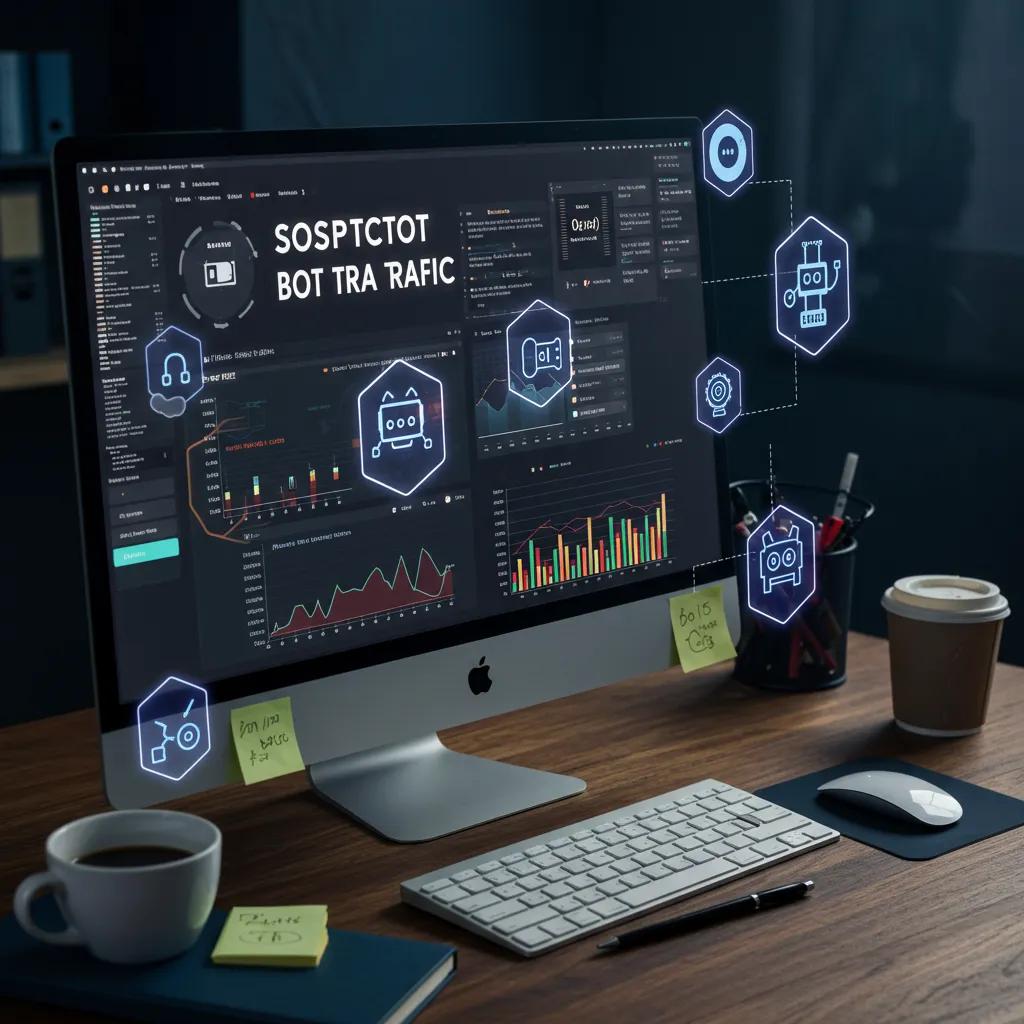
Click fraud and bot traffic reduce the value of purchased clicks by generating large volumes of non-converting or invalid visits that nonetheless appear as “clicks” in raw metrics. Bots can be basic scripts or sophisticated AI-driven agents that mimic human patterns, creating clustered timestamps, identical user agents, or suspicious referrer strings that degrade conversion rates. Industry estimates indicate that a meaningful share of online traffic can be non-human, which is why providers need robust vetting and blocking systems to preserve campaign integrity. When bots dominate a campaign’s click pool, reported click counts look healthy while opt-in and sales metrics remain low, masking true performance.
Real-Time Ad Click Fraud Detection: Combating Malicious Parties in Digital Advertising
Digital advertising, however, comes with its own set of challenges. One of the biggest challenges is ad fraud. There is a proliferation of malicious parties and software seeking to undermine the ecosystem and causing monetary harm to digital advertisers and ad networks. Pay-per-click advertising is especially susceptible to click fraud, where each click is highly valuable. This leads advertisers to lose money and ad networks to lose their credibility, hurting the overall ecosystem. Much of the fraud detection is done in off
Real-Time Ad Click Fraud Detection, 2020
- Red flags in tracking that suggest bot traffic:
Unnaturally high click velocity (many clicks in a short burst).
Low time-on-page and immediate bounces with identical referrers.
Repeating IP addresses or identical user-agent strings.
Spotting these patterns in live tracking helps you decide whether to request investigation, replacement traffic, or a refund from the vendor.
How Does Wholesale Premium Traffic Guarantee Delivery of Your Purchased Clicks?

Wholesale Premium Traffic (WPT) structures its promise around delivering genuine email-driven clicks while clarifying that it does not guarantee conversions or sales. The company emphasizes a delivery guarantee backed by systems that are designed to block bot traffic, a live tracking link for every campaign, and operational options such as over-delivery on clicks and a risk-free cancellation policy before a campaign begins. Explaining what each component covers—and what it does not—helps buyers set correct expectations and know what evidence to collect if issues arise. Below is a concise comparison of those guarantee components and what buyers can expect in practice.
The table below summarizes the main guarantee components and how they typically apply.
| Guarantee Component | What It Covers | Remedy / Condition |
|---|---|---|
| Guaranteed Click Delivery | Delivery of the purchased number of email clicks | Over-delivery credit or replacement clicks when shortfall is verified |
| 100% Real Human Traffic Always | Filtering and blocking to exclude known bot/automated traffic | Investigation supported by live tracking evidence |
| Over-Delivery (often +10%) | Delivering extra clicks beyond the order to ensure expectations are met | Applies at provider discretion to offset minor shortfalls |
| Live Tracking | Tracking link per campaign showing timestamps and referrers | Used as primary evidence for delivery verification |
| Risk-Free Guarantee | Ability to cancel orders before they begin | Cancellation must occur prior to campaign start to avoid delivery |
This EAV-style summary clarifies which elements help prove delivery and which tools the vendor uses to enforce quality. Buyers should focus on collecting live tracking data and noting the scope of what is guaranteed—clicks, not conversions—and then follow the provider’s dispute pathway if evidence shows non-delivery.
What Systems Ensure 100% Real Human Traffic and Bot-Free Clicks?
Wholesale Premium Traffic describes a layered approach to traffic quality that includes list vetting, blocking rules, and ongoing traffic monitoring to reduce bot-driven and low-quality clicks. At a high level, list vetting filters out suspect sources and prioritizes niche-targeted lists for the “Make Money Online” category to improve relevance and engagement. Blocking systems and automated rules detect patterns consistent with bots—such as repeated IPs, suspicious user agents, or unnatural click velocity—and remove or discount that traffic before it reaches campaigns. Buyers can validate this by inspecting the live tracking link for IP diversity, varied referrers, and human-like session timing.
- Quick verification checks you can run:
Inspect IP address variety in tracking logs to confirm diversity.
Verify referrer domains and user-agent strings for normal variation.
Look for consistent time-on-page patterns that resemble human browsing.
These practical checks give you confidence that the vendor’s vetting and blocking efforts are functioning and help form documented evidence if you need to request remediation.
How Does Live Tracking Help Verify Your Solo Ad Click Delivery?
Live tracking provides the primary audit trail for any solo ad campaign by recording each click event with timestamps, IPs, and referrer information so buyers and vendors can jointly assess delivery quality. The tracking link creates a sequential record you can match to your expected click count and inspect for irregularities like clustered timestamps, identical referrers, or implausible session durations that suggest automated traffic. When a buyer suspects non-delivery, the tracking export becomes the core evidence set used to request replacement clicks or a refund; it shows precisely which events occurred and flags anomalies for vendor review. Learning to read these metrics quickly shortens dispute timelines and improves the odds of a satisfactory resolution.
- Key tracking metrics to monitor:
Timestamps and pacing of clicks over the campaign window.
IP address distribution and geographic diversity.
Referrer domains and user-agent strings indicating real email opens.
Understanding these metrics gives you a defensible position for any follow-up with the vendor and enables targeted troubleshooting when clicks underperform.
What Are Your Rights and Options If Solo Ad Clicks Aren’t Delivered?
Buyers have a practical set of rights and options when purchased clicks fail to arrive as promised: verify tracking data, document discrepancies, submit a claim with evidence, and pursue remedies such as replacement traffic or refunds when the vendor’s guarantee covers shortfalls. The responsible buyer approach is procedural: start with verification to eliminate technical causes, compile the live tracking export plus screenshots of landing page analytics, and then open a formal support request with the vendor citing the collected evidence. Many reputable providers maintain explicit dispute processes that rely on tracking exports and will either deliver replacement clicks, credit over-delivery, or offer refunds under their stated guarantee. Knowing the typical vendor responses and required evidence speeds resolution and prevents unnecessary escalation.
The following table lays out common scenarios and vendor responses so you can see likely outcomes before you initiate a dispute.
| Scenario | Vendor Response | Action / Outcome |
|---|---|---|
| Shortfall in delivered clicks | Investigation using live tracking; provide replacement clicks or credit | Submit tracking export and request replacement or credit |
| Invalid or bot-like clicks detected | Filtering review and adjustment; replacement or refund if validated | Provide timestamps and anomalies for vendor review |
| Tracking misconfiguration on buyer side | Technical support to correct tracking; no refund for buyer error | Correct tracking and re-run campaign or agree on remediation |
| Campaign canceled before start | Order canceled under risk-free guarantee | Full cancellation if requested prior to campaign start |
This table helps buyers understand what to expect and how to document claims. When you follow the documented steps and present clear tracking evidence, most legitimate providers will honor their delivery guarantee or offer a remedial pathway.
How Does the Wholesale Premium Traffic Refund Policy Protect You?
Wholesale Premium Traffic promotes a risk-management approach centered on guaranteed delivery features including live tracking and a stated risk-free cancellation option prior to campaign start. The company’s statements emphasize delivery of genuine clicks rather than conversion guarantees, and they state remedies such as over-delivery or replacement for verified shortfalls. Buyers should carefully document tracking data when requesting remediation and reference the vendor’s live-tracking export when opening a claim. Because the guarantee focuses on click delivery and bot-free traffic, refunds or replacements are processed based on verification of the tracking evidence and the specific terms the provider sets for each campaign.
- What buyers should submit with a claim:
Export of the tracking dashboard showing timestamps and IPs.
Screenshots of landing page analytics for the campaign window.
Clear description of the shortfall and desired remedy (replacement or refund).
Following this documentation protocol aligns your request with the vendor’s verification workflow and increases the likelihood of a timely, fair resolution.
What Steps Should You Take If Your Solo Ad Vendor Fails to Deliver?
When a vendor fails to deliver the promised clicks, follow a stepwise process that moves from diagnosis to documented claim to escalation if necessary. First, verify that your own tracking and landing page were configured and functioning during the campaign window to avoid blaming the vendor for buyer-side issues. Second, export the vendor’s live tracking and collect supporting screenshots from your analytics platform, noting timestamps and any anomalous patterns. Third, submit a formal claim to the vendor with precise evidence and a clear request for replacement traffic or refund under their stated guarantee terms. Finally, if the vendor’s response is unsatisfactory and you have formal payment protections (such as credit card chargeback options), evaluate those as a last resort while keeping records of all communications.
- Verify tracking link and landing page health.
- Export tracking data and take supporting screenshots.
- Submit a formal evidence packet to vendor support.
- Escalate with payment provider only after vendor remedies are exhausted.
This checklist creates a defensible chain of evidence and helps convert a disputed delivery into a concrete remediation like replacement clicks or a credited adjustment.
How Can You Avoid Solo Ad Scams and Ensure Purchased Traffic Quality?
Avoiding solo ad scams requires a proactive vetting protocol that emphasizes tracking transparency, realistic guarantees, and test-based buying to validate a vendor’s claims before committing large budgets. Start by asking for a sample tracking link and inspecting past campaign tracking exports to verify IP diversity and realistic click pacing. Use small test buys first to confirm list targeting and traffic quality, and demand explicit delivery guarantees that focus on real human traffic rather than conversion promises. These vetting steps reduce the chance of purchasing bot-driven or mis-targeted clicks and give you objective metrics to compare providers.
- A short vetting protocol buyers can follow:
Request a live tracking sample and inspect metrics.
Run a low-cost test campaign to validate list quality.
Confirm the vendor’s written guarantee scope and remediation options.
Applying this protocol before scaling spend lowers risk and gives you the data needed to choose a reliable provider.
What Are the Warning Signs of Unreliable Solo Ad Providers?
Unreliable providers typically reveal themselves through a limited set of warning signs that are easy to check prior to purchase. One red flag is the absence of a tracking link or refusal to provide live tracking access for a campaign; transparent providers supply tracking by default. Another is vague or non-existent refund and remediation terms—if a vendor cannot clearly state what happens when clicks don’t arrive, that increases buyer risk. Unrealistic promises about guaranteed conversions rather than delivery of clicks are also suspect, because conversion depends on factors outside the vendor’s control. Finally, suspiciously low prices accompanied by high-volume click claims often correlate with low-quality or bot-infested sources.
- Top red flags to avoid:
No live tracking or refusal to provide tracking samples.
Vague refund or dispute policies with no written terms.
Guarantees framed as conversion promises rather than click delivery.
Pricing that seems too low for niche-targeted, vetted traffic.
Lack of niche targeting or audience specification.
Recognizing these signs lets you eliminate risky vendors early and prioritize providers that emphasize tracking and delivery guarantees.
How Does Wholesale Premium Traffic Differentiate Itself from Competitors?
Wholesale Premium Traffic positions itself with specific quality-focused claims: guaranteed click delivery, an emphasis on “100% Real Human Traffic Always,” live tracking per campaign, niche targeting for the Make Money Online category, and a risk-free cancellation option before campaigns begin. These components aim to address the primary buyer concerns—bot traffic and unverifiable delivery—by making tracking and delivery the core of the service promise. Rather than guaranteeing conversions, WPT focuses on delivering genuine clicks and giving buyers the evidence they need to prove outcomes and request remediation. This targeted combination of vetting, blocking systems, live tracking, and an explicit delivery promise is the practical differentiator they emphasize for buyers seeking safer solo ad buys.
- Practical buyer benefits from that approach:
Easier verification and dispute resolution thanks to live tracking.
Reduced likelihood of bot-driven waste through list vetting and blocking.
Clearer expectations: paid clicks delivered, conversions left to buyer optimization.
By centering on click authenticity and auditable delivery, the provider attempts to lower buyer risk compared with vendors that focus primarily on sales claims.
How Can You Maximize ROI with Guaranteed Solo Ad Click Delivery?
Guaranteed click delivery is only the first step toward ROI; converting those delivered clicks into opt-ins, leads, or sales depends on landing page relevance, pre-framing in the ad copy, and follow-up sequences that capture intent immediately. Optimize your landing page headline, ensure mobile speed and form simplicity, and align the offer tightly with the ad message to reduce drop-off. Use segmentation and targeted messaging in subsequent email sequences to nurture the traffic and turn initial interest into conversions. The combination of guaranteed traffic and strong funnel optimization multiplies ROI because you turn auditable, real clicks into measurable outcomes.
| Factor | How Measured | Suggested Action |
|---|---|---|
| Landing page relevance | Opt-in rate, bounce rate | Tighten headline and match ad pre-frame to offer |
| Page speed & UX | Load time, mobile performance | Simplify forms, compress assets, prioritize mobile UX |
| Offer clarity | Click-to-opt-in conversion | Test CTA variation and remove distractions |
| Follow-up cadence | Email open/response rates | Implement segmented sequences and A/B test timing |
This mini EAV table links on-page and funnel factors to measurable actions so you can systematically convert delivered clicks into revenue.
What Factors Influence Your Success Beyond Click Delivery?
Several controllable factors reliably influence conversion rates once clicks are delivered: the clarity of your offer, landing page load performance, the strength of your pre-frame in the email or ad copy, and the immediacy of your follow-up sequence. Clear alignment between the ad creative and landing page sets user expectations and reduces bounce rates. Fast, mobile-optimized pages with minimal friction increase the likelihood that a delivered click becomes an opt-in. Finally, an automated follow-up sequence that segments new visitors based on behavior preserves and amplifies conversion opportunity after the initial click.
- Actionable tips to improve outcomes:
Match ad messaging to landing page headline and offer.
Reduce load time and simplify the conversion form.
Send an immediate, segmented follow-up email to warm leads.
These optimizations convert the guaranteed clicks into repeatable performance improvements for your campaigns.
How Can You Use Tracking Data to Improve Your Campaign Performance?
Live tracking data is a goldmine for iterative campaign improvement: collect click-level exports, segment by IP, referrer, and timestamp, and then run A/B tests on landing page variants to see which combinations yield higher opt-in rates. Use KPIs like opt-in rate, conversion rate, time on page, and bounce rate to prioritize experiments. For example, run two headlines against the same traffic slice and measure opt-in lift; if one consistently outperforms the other, roll that change into the full funnel. Tracking allows you to identify underperforming sources quickly and reallocate spend to segments that drive the best ROI.
- Collect and segment tracking exports by source attributes.
- Run A/B tests on headline, CTA, and form length.
- Iterate rapidly, prioritizing the metrics that move revenue.
When you treat delivered clicks as testable traffic rather than final outcomes, you turn guaranteed delivery into predictable improvement.
What Do Clients Say About Guaranteed Solo Ad Click Delivery?
Wholesale Premium Traffic’s single-page sales funnel emphasizes testimonials and benefits, and those client messages focus on delivery reliability, the transparency of live tracking, and the vendor’s responsiveness when issues arise. Rather than quoting specific testimonials, buyers can look for testimonial themes that validate the claims of click delivery and resolution processes—statements about on-time delivery, tracking transparency, and fair remediation tend to be the most relevant indicators. Observing these themes helps prospective buyers know what to expect and what evidence to request before committing to larger purchases.
The next table summarizes the recurring testimonial themes and what they imply for buyers evaluating delivery claims.
| Testimonial Theme | What It Suggests | Buyer Takeaway |
|---|---|---|
| Delivery reliability mentions | Click counts matched or exceeded expectations | Ask for recent tracking samples before buying |
| Tracking transparency praise | Easy-to-read live tracking dashboards | Confirm tracking access for every campaign |
| Resolution/response feedback | Vendor responded to issues and remedied shortfalls | Document communications to ensure accountability |
Reviewing these themes helps you prioritize the evidence and assurances that matter most when buying solo ad traffic.
Which Success Stories Highlight Reliable Click Delivery?
While we do not reproduce individual testimonials, anonymized success motifs suggest that campaigns where buyers had immediate access to tracking exports and clear matching between ad copy and landing page saw the smoothest delivery and most straightforward dispute resolution. These patterns reinforce the practical rule: obtain tracking access upfront, run small tests to validate list targeting, and document results so that when delivery discrepancies occur there is a clear record. Buyers who follow that disciplined approach typically experience fewer unresolved disputes and quicker remediation when shortfalls are found.
- Pre-launch tracking verification and a small test spend.
- Immediate matching of ad pre-frame to landing page content.
- Prompt documentation and escalation when anomalies appear.
These elements create the operational conditions for reliable delivery and fair remediation.
How Do Testimonials Reflect Wholesale Premium Traffic’s Commitment?
Testimonials and on-site feedback for Wholesale Premium Traffic center on themes of live-tracking transparency, niche-targeted delivery for the Make Money Online vertical, and the company’s stated commitment to real human clicks rather than conversion promises. Those themes indicate a provider intent on making delivery auditable and disputes resolvable using tracking evidence rather than anecdote. For buyers, recurring testimonial motifs about responsiveness and tracking clarity are more valuable than conversion-based claims, because they speak directly to the vendor’s ability to deliver what was purchased: real, verifiable clicks.
- Buyer implication from testimonial themes:
Favor providers that emphasize tracking and verifiable delivery.
Use testimonial themes to form pre-purchase questions about evidence and remediation.
Prioritize vendors that make cancellation and dispute terms explicit before ordering.
These practices align buyer expectations with the operational reality of purchased click delivery and ensure you have the tools to enforce the guarantee.
For buyers seeking a risk-managed option with auditable delivery features, Wholesale Premium Traffic highlights guaranteed click delivery, “100% Real Human Traffic Always,” typically offers over-delivery credit (often around 10 percent), and provides a live tracking link per campaign together with a risk-free cancellation policy prior to campaign start. If you want a provider that makes delivery and tracking central to its service, consider those guarantees and vet the provider using the verification steps in this guide.