
Understanding Solo Ad Pricing: What’s the Cost Per Click?
How Much Do Solo Ads Cost? Complete Pricing Guide for Affiliate Marketers
Solo ads are paid email promotions where an advertiser rents a vendor’s email list and pays for clicks, leads, or a flat placement, and in 2025 typical costs are expressed as cost per click (CPC) or cost per lead (CPL). This guide explains the pricing models you’ll encounter, the main factors that influence cost, and how to calculate and maximize solo ad ROI for affiliate campaigns. Affiliate marketers need clear benchmarks and vendor-check criteria to plan budgets, reduce risk, and scale profitable offers; this article provides both formulas and tactical checklists to do that. You will learn the mechanics of CPC billing, when CPL or flat-rate buys make sense, how traffic quality and niche relevance change prices, and current market averages for 2025. The guide also includes a transparent breakdown of Wholesale Premium Traffic’s solo ad packages, explicit CPC ranges that vendors are charging, and the guarantees that lower buyer risk. Read on for pricing models, traffic-tier comparisons, ROI examples, decision playbooks for list building versus direct sales, and practical steps to test and scale solo ad buys.
What Are the Common Solo Ad Pricing Models in 2025?
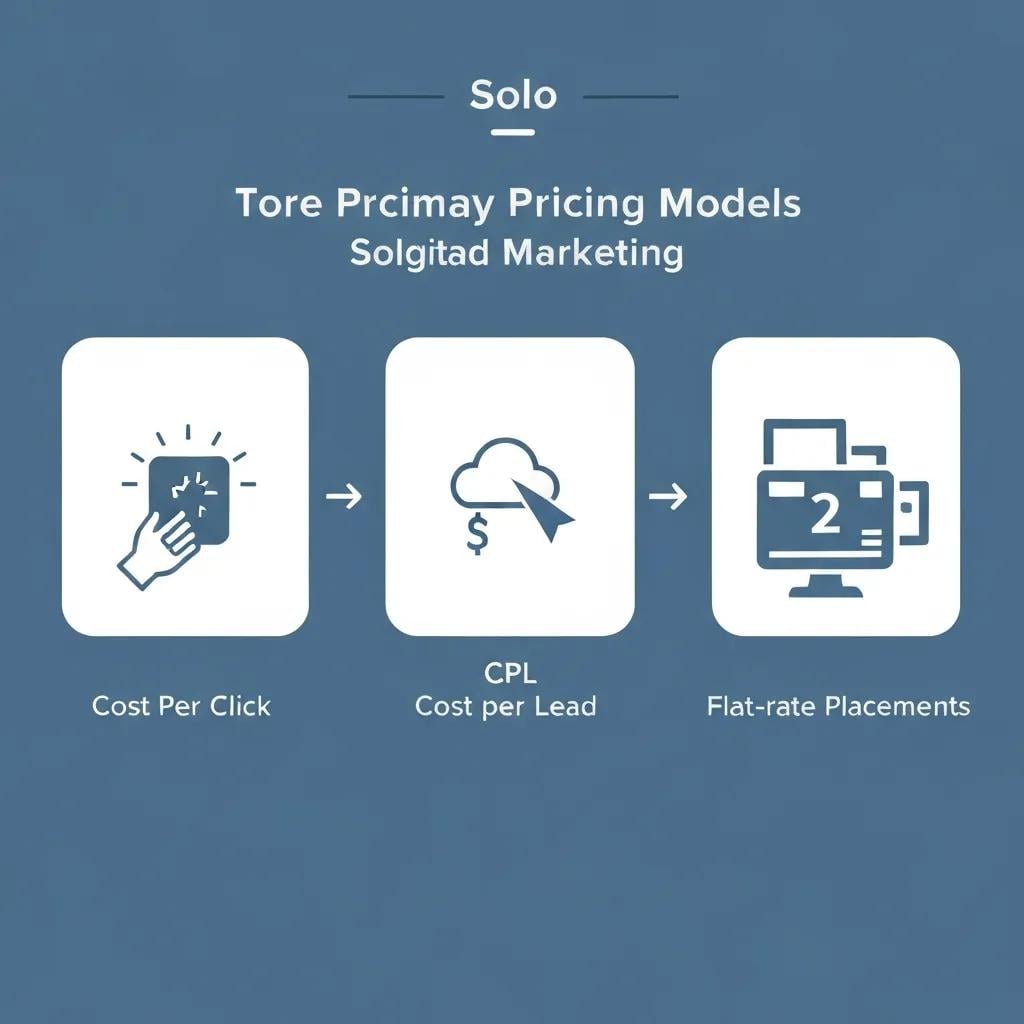
Solo ads in 2025 are commonly sold using three primary pricing models—cost per click (CPC), cost per lead (CPL), and flat-rate placements—and each model serves different campaign goals and measurement needs. CPC charges advertisers for verified clicks delivered to a landing page, giving tight control over traffic cost-per-click and easing performance comparisons across vendors. CPL bills only for confirmed opt-ins or leads, shifting tracking risk to the vendor and making it useful when list growth is the priority. Flat-rate buys charge a single fee for an email blast or placement, which can be useful for brand exposure or negotiated partnerships when conversion tracking is secondary. Understanding these models helps you select a billing approach that aligns with your offer’s funnel and tracking capabilities, and the next subsection explains CPC mechanics in practical detail.
Digital Tools for Analyzing Advertising Campaign Effectiveness in B2B
This article explores the keydigital toolsused for analyzing the effectiveness of advertising campaigns, focusing on metrics such as Cost Per Lead (CPL), Conversion Rate, and Customer Lifetime Value (CLV).
DIGITAL TOOLS FOR ANALYZING THE EFFECTIVENESS OF ADVERTISING CAMPAIGNS IN THE B2B SECTOR, 2024
Solo ad pricing in 2025 typically favors CPC when precise performance tracking is available, while CPL and flat-rate models remain viable for specific goals.
This section lists the models and why marketers choose each.
- CPC (Cost Per Click): Advertisers pay per verified click; best for testing offer-level performance and comparing CPC across vendors.
- CPL (Cost Per Lead): Payment for confirmed opt-ins; useful when lead quality and list growth are primary goals.
- Flat Rate: Single fee for an email send or placement; suitable for awareness or negotiated promotions.
Each model has trade-offs between measurement clarity, vendor risk, and campaign goals. The next subsection drills into how CPC billing works and common caveats to watch for.
How Does Cost Per Click Work for Solo Ads?
Cost per click (CPC) for solo ads charges advertisers for each verified click that reaches a tracked landing page, and it works by linking the vendor’s email send to a tracking pixel or click-tracking URL to attribute each click to the campaign. Tracking accuracy is critical: clicks must be de-duplicated and filtered for bots to avoid inflated bills, and reputable vendors provide verification reports showing delivered clicks and timestamps. CPC is favored when advertisers want tight control over ad spend since ROI math begins with a predictable per-click cost tied to conversion data. Example calculations use CPC multiplied by clicks to get total cost, then divide against revenue to compute ROI, which is covered later in the ROI section. Understanding CPC mechanics lets you spot billing irregularities and negotiate clearer verification before you buy.
When Should You Choose Cost Per Lead or Flat Rate Models?
Choose CPL when your priority is list building and you need verified opt-ins rather than anonymous clicks; this model aligns vendor incentives with lead quality and reduces wasted traffic. CPL is particularly effective when the vendor can accurately verify opt-ins and when your follow-up sequence is optimized to monetize new subscribers. Flat-rate buys make sense for awareness campaigns, product launches, or when negotiating special placements with a trusted vendor where conversion tracking is secondary. Before selecting CPL or flat-rate models, run small tests to validate vendor tracking and estimate your effective cost per acquisition; the next section explains the factors that make those costs vary.
What Factors Influence the Cost of Solo Ads?
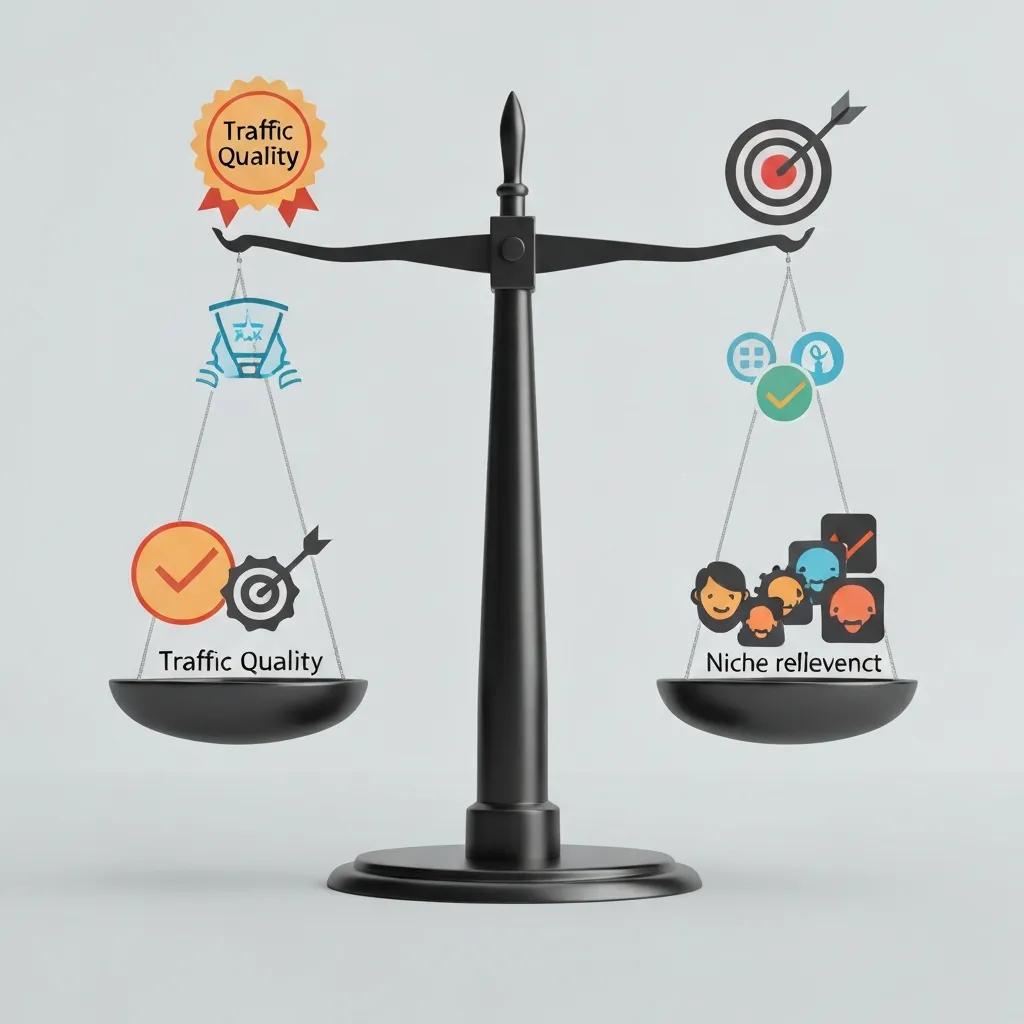
Several interlocking factors determine solo ad cost, including traffic quality (tier and geo), niche relevance, vendor reputation, list freshness, and volume discounts, and each factor shifts expected CPC or CPL. Traffic quality—measured by opt-in rate, click-through rate (CTR), and downstream conversion rate—drives price because higher-quality traffic converts at higher rates and justifies a higher CPC. Niche relevance increases conversion likelihood; offers tightly aligned with the list’s interests convert better and therefore command premium pricing. Vendor reputation, guarantees, and verification capabilities reduce buyer risk and often come at a cost premium that can pay off in more consistent conversions. Understanding these drivers lets you evaluate vendor pitches and anticipate how prices will move for your specific offer.
Traffic tier comparisons help translate these abstract factors into expected price and performance ranges; the table below summarizes typical relationships between tier, CPC, and expected opt-in or conversion benchmarks.
Intro to traffic tier comparison table: This table compares common traffic tiers and their typical CPC/expected performance trade-offs to help affiliate marketers set realistic expectations.
| Traffic Tier | Typical CPC Range | Expected Opt-in / Conversion Notes |
|---|---|---|
| Premium US Only | $0.32–$0.50 per click | Higher opt-ins and conversion rates for US-targeted offers; best for direct sales and high-LTV funnels |
| Quality Tier 1 | $0.32–$0.50 per click | Strong performance across Tier 1 geos; balances cost and conversion reliability |
| Quality Unique | $0.32–$0.50 per click | Fresh prospects with minimal repeat exposure; useful for list building and avoiding fatigue |
This comparison shows that while CPC ranges can overlap, expected opt-in and conversion behavior differs by tier; the next subsection explains traffic quality metrics in practical terms.
Traffic quality metrics are the next focus because they directly impact how much you should be willing to pay and how to measure vendor performance.
This checklist helps you vet vendors before buying.
- Verify Tracking and Reports: Confirm vendors offer click-level reports and live tracking to validate delivery.
- Check Guarantees: Look for bot-free guarantees and delivery assurances to lower acquisition risk.
- Ask About List Freshness: Confirm how frequently lists are refreshed to avoid buying fatigued traffic.
Use these vetting steps before committing budget; the following section explains niche relevance and reputation in more detail.
How Does Traffic Quality Affect Solo Ad Prices?
Traffic quality affects solo ad prices because higher-quality lists yield higher opt-in and conversion rates, which justify paying more per click or lead. Metrics to watch are opt-in rate (percentage who subscribe after clicking), click-through rate (CTR) within the email, and conversion rate on the landing page; these three drive your effective cost per acquisition. For example, a list with a 25–50% opt-in range and strong CTR will typically produce lower cost-per-sale for direct offers, even if the CPC is higher. Evaluating sample reports or requesting a small proof-buy helps you estimate true performance before scaling, and the next subsection covers how niche relevance and vendor reputation further shape these expectations.
Why Do Niche Relevance and Vendor Reputation Matter for Pricing?
Niche relevance matters because audiences that match your offer convert at much higher rates, allowing you to pay a premium CPC while retaining positive ROI; targeted lists of buyers beat general lists for conversion efficiency. Vendor reputation matters because established vendors with transparent tracking, testimonials, and guarantees reduce risk of bot traffic or under-delivery, justifying higher rates. Verify reputation signals such as live tracking availability, over-delivery policies, and clear refund or make-good rules; these features lower your expected variance and improve scaleability. Evaluating both niche fit and vendor signals before purchase helps prevent wasted spend and sets the stage for predictable scaling.
How Much Do Wholesale Premium Traffic’s Solo Ad Packages Cost?
Wholesale Premium Traffic offers solo ad traffic packages segmented by traffic quality—Premium US Only, Quality Tier 1, and Quality Unique—and their per-click pricing falls within a provided range depending on volume and tier. According to available pricing insights, package CPCs are presented within a $0.32 to $0.50 per click band, with exact per-click costs depending on the selected tier and purchase volume. The company emphasizes delivery transparency and buyer protections designed to reduce risk, including live tracking and guarantees that can simplify verification during initial tests. Below is a compact EAV-style table summarizing the package names, pricing band, and key service attributes to enable quick comparison for purchase decisions.
Intro to Wholesale Premium Traffic package table: The table below summarizes package names, pricing band, and core guarantees that matter for budget planning.
| Package Name | Cost per Click (CPC) | Key Guarantees / Attributes |
|---|---|---|
| Premium US Only | $0.32–$0.50 per click | US-targeted traffic, higher conversion potential, live tracking |
| Quality Tier 1 | $0.32–$0.50 per click | High-tier geos, balanced cost-performance, fresh prospects |
| Quality Unique | $0.32–$0.50 per click | Unique exposure, reduced audience overlap, suitable for list building |
This compact comparison clarifies that Wholesale Premium Traffic prices sit within the shared CPC band and that choice of tier and volume will determine the exact CPC; the next subsection outlines the explicit guarantees and why they matter for buyer risk.
Wholesale Premium Traffic’s guarantees reduce delivery risk and provide transparency for campaign measurement.
This list explains the vendor guarantees and buyer benefits.
- 100 percent real human traffic: Ensures clicks come from humans, not bots, which protects conversion metrics.
- 10 percent over-delivery: Provides extra clicks beyond the purchase to improve campaign buffer and protect against shortfalls.
- Live tracking for campaigns: Enables real-time verification and quicker optimization decisions.
- Fast delivery (typically 24–72 hours): Speeds testing cycles and shortens time to insight.
- Landing page assessment service: Offers guidance to improve conversion rates before or during campaigns.
- Bot-free, risk-free guarantee on traffic quality and delivery: Lowers the risk of wasted spend.
These guarantees translate into practical protections like easier verification and faster iteration; the next H2 shows how to calculate and maximize ROI using these verification tools.
What Are the Price Ranges for Premium US Only, Quality Tier 1, and Quality Unique Packages?
Wholesale Premium Traffic uses a per-click pricing model where package CPCs fall within an overall $0.32 to $0.50 range depending on tier and purchase volume, so exact per-click numbers are set during ordering. Price movement within this band is driven by factors such as traffic tier (US-only vs. Tier 1 vs. Unique exposure), the size of the buy (volume discounts), and any negotiated terms like repeated buys or long-term contracts. For planning, treat $0.32–$0.50 as the expected CPC envelope and estimate effective cost per lead or sale using your own opt-in and conversion assumptions. When negotiating or testing, request firm CPC quotes and live tracking access to validate delivery before scaling purchases.
What Guarantees and Over-Delivery Benefits Does Wholesale Premium Traffic Offer?
Wholesale Premium Traffic provides explicit guarantees designed to reduce buyer risk, including a 100 percent real human traffic assurance, a 10 percent over-delivery policy, live campaign tracking, and typically fast delivery within 24–72 hours. The 10 percent over-delivery means you receive at least the purchased clicks plus a buffer, which lowers the impact of minor shortfalls and supports predictable testing. Live tracking gives you immediate visibility into delivery and click timing, simplifying attribution and optimization decisions. The company also offers landing page assessment services to help improve conversion rates before scaling, and these combined protections help advertisers minimize wasted spend and speed up profitable scaling.
How Can Affiliate Marketers Calculate and Maximize Solo Ad ROI?
Calculating solo ad ROI begins with a clear formula—(Revenue − Cost) / Cost—and requires reliable inputs for CPC, opt-in rate, and conversion rate to estimate expected returns for an affiliate offer. Using verified CPC from your vendor and measured opt-in and conversion performance from initial tests, you can project revenue per click and compute ROI before committing larger budgets. Maximizing ROI focuses on three levers: reduce CPC through negotiation or tier selection, increase opt-in rates via landing page optimization and targeted creative, and boost conversion rates through follow-up sequences and offer optimization. Below is an ROI EAV table that maps key metrics to formulas and example values to make the math concrete for affiliate campaigns.
Intro to ROI table: This table shows core metrics, the formulas you’ll use, and example values to illustrate a simple ROI calculation.
| Metric | Formula | Example Value |
|---|---|---|
| CPC | Cost per Click | $0.40 |
| Opt-in Rate | Opt-ins / Clicks | 30% |
| Conversion Rate (sale) | Sales / Opt-ins | 5% |
| ROI | (Revenue − Cost) / Cost | Example: Assuming $50 sale value, ROI ≈ ((0.05*0.30*50) − 0.40) / 0.40 |
This table demonstrates how small changes in opt-in or conversion rates materially change ROI; the next subsection provides the step-by-step formula and a worked numeric example.
For optimization, use the vendor’s live tracking and landing page assessment tools to tighten these inputs and improve profitability.
This list outlines pragmatic optimization tactics you can apply immediately.
- Test with Small Buys: Start with limited clicks to measure opt-in and conversion rates before scaling.
- Use Landing Page Assessments: Improve opt-in and conversion rates via headline, form, and offer tweaks.
- Implement Follow-up Sequences: Increase lifetime value by converting leads with email sequences and retargeting.
- Negotiate Volume Pricing: Use proven performance to secure lower CPCs as you scale profitable buys.
Apply these tactics iteratively and measure impact with the ROI formula below.
What Is the Formula for Calculating Solo Ad Return on Investment?
The core formula for solo ad ROI is simple: ROI = (Revenue − Cost) / Cost, and it becomes actionable when you express Revenue as expected sales per click given your measured opt-in and conversion rates. Step-by-step: start with CPC to compute total cost, multiply clicks by opt-in rate to get leads, multiply leads by conversion rate and average sale value to get revenue, then apply the ROI formula. For a quick worked example, assume CPC = $0.40, 100 clicks cost $40, opt-in rate = 30% yields 30 leads, conversion rate = 5% yields 1.5 sales, and average sale value = $50; revenue ≈ $75, so ROI ≈ (75 − 40) / 40 = 0.875 or 87.5%. This calculation shows how sensitive ROI is to opt-in and conversion improvements, and the next subsection explains that sensitivity in more detail.
How Do Opt-In Rates and Conversion Rates Impact Your ROI?
Opt-in and conversion rates are multiplicative levers: small percentage improvements in either dramatically increase revenue per click and therefore ROI. For example, doubling opt-in rate from 15% to 30% doubles leads and typically doubles revenue per click, while improving conversion rate from 3% to 6% similarly multiplies sales output from the same click volume. Sensitivity analysis—testing low, medium, and high scenarios—helps you forecast break-even CPC and determine how much you can pay per click while remaining profitable. Use landing page assessment, follow-up sequences, and offer testing to push both rates upward before scaling spend, which ties directly into choosing the right package and negotiating volume pricing with vendors.
How Do You Choose the Right Solo Ad Package for Your Campaign Goals?
Choosing the right solo ad package requires mapping campaign goals—list building versus direct sales—to traffic tier characteristics and test budgets, then following a structured scaling path to minimize risk. For list building, prioritize packages that emphasize unique exposure and fresh prospects to avoid audience fatigue; for direct sales, favor Premium US Only or Quality Tier 1 traffic that converts better for high-commitment offers. Start with a small Quality Unique buy to build a clean list, then test direct-sale offers in Premium US Only with optimized landing pages to compare performance. These staged choices let you evaluate both acquisition cost and downstream value before committing larger budgets.
What Are the Best Practices for Starting Small and Scaling Solo Ad Campaigns?
A disciplined five-step playbook helps you start small and scale solo ad campaigns while protecting ROI: (1) run a conservative test buy to collect CPC, opt-in, and conversion data; (2) apply landing page improvements via assessment to raise opt-in and conversion rates; (3) implement a follow-up sequence to monetize leads and improve LTV; (4) scale buys only after consistent positive ROI across multiple tests; and (5) negotiate volume discounts or better placement once performance is repeatable. Track metrics closely and use live tracking tools to verify delivery and timing; this data-driven approach reduces risk and enables confident scaling when combined with vendor guarantees and over-delivery protections.
What Are the Latest Trends and Average Solo Ad Prices in 2025?
In 2025 the solo ad market shows clearer segmentation by traffic tier and stronger emphasis on verification and guarantees, with industry average CPC ranges typically quoted between $0.30 and $0.95 and many active providers clustering around $0.30–$0.50 for mainstream Tier 1 offerings. Buyers increasingly demand live tracking, bot-free guarantees, and proof of list freshness, which pushes reputable vendors to standardize transparent delivery practices and justify premium pricing. Rising focus on data-driven testing and ROI calculators has also shifted buying behavior toward performance-based CPC buys rather than one-off flat-rate promotions. These trends mean marketers should budget based on realistic CPC ranges and plan testing cycles that emphasize conversion optimization.
The following list gives practical budgeting and trend takeaways for 2025.
- Expect Variation by Tier: Tier 1 and US-only traffic command higher CPCs but usually convert better.
- Prioritize Verification: Live tracking and bot-free guarantees are now common buying prerequisites.
- Plan for Testing: Allocate budget for iterative testing to find the CPC you can sustainably pay.
These trends guide reasonable budgeting and vendor expectations; the final subsection quantifies average CPCs and explains vendor signals that justify price differences.
What Is the Average Cost Per Click for Solo Ads Across the Industry?
Average cost per click across the solo ad industry in 2025 typically ranges from about $0.30 up to $0.95 depending on vendor, traffic tier, and niche specificity, while many Tier 1 and US-focused packages fall in a narrower $0.30–$0.50 band. Variability comes from niche demand, geographic targeting, list freshness, and vendor verification standards; highly specialized buyer lists or campaigns in competitive niches push CPCs toward the top end. For budgeting, use conservative CPC estimates combined with worst-case opt-in and conversion assumptions to determine break-even cost-per-click before you buy. The next subsection explains which vendor reputation signals correspond with higher pricing.
How Do Vendor Reputation and Traffic Tier Affect Market Pricing?
Vendor reputation and traffic tier affect pricing because trusted vendors with transparent tracking, solid guarantees, and consistent delivery reduce buyer risk, and that reduced variance is often priced into higher CPCs. Reputation signals to look for include live tracking, over-delivery policies, explicit bot-free guarantees, and services such as landing page assessment that improve conversion probability. Traffic tier signals—Premium US Only, Quality Tier 1, Quality Unique—map to expected conversion behavior and therefore justify different price points. Validate these signals through small initial tests and require performance proof before committing larger budgets.
This final checklist summarizes what to prioritize when choosing vendors and setting budgets in 2025.
- Require verification and guarantees on any CPC quote.
- Run small proof buys to validate vendor claims.
- Use landing page and follow-up optimization to improve ROI before scaling.
- Negotiate volume discounts only after consistent performance is proven.
These steps close the loop between market pricing trends and practical buying behavior in today’s solo ad landscape.