

Discover Unique Clicks Pricing: What You Need to Know – CPC
Pricing for Unique Clicks Traffic Packages: Your Complete Guide to Solo Ads and Tier 1 Traffic Costs
Unique clicks pricing matters because it measures distinct human interactions with your campaign and ties spend directly to actual potential customers rather than inflated totals from duplicate or bot-driven clicks. This guide explains what unique clicks are, how they differ from total clicks, and why cost-per-unique-click (CPUC) and CPC calculations should drive purchasing decisions for solo ads and paid email traffic. Readers will learn how Tier 1 traffic influences CPC, the common pricing models used in the UK market, practical CPUC calculations, and optimisation tactics that increase ROI from purchased clicks. The article maps out three core areas: defining unique clicks and benchmark rates, analysing Tier 1 vs mixed traffic pricing impacts, and comparing pricing models including package features such as over-delivery and live tracking. Practical tables show how package attributes map to expected use cases, and tactical lists provide step-by-step actions to convert traffic into leads and sales. Throughout, targeted keywords like unique clicks pricing, cost per click, solo ads pricing UK, and premium US clicks are woven into clear, actionable guidance so marketers can make informed buying decisions.
What Are Unique Clicks and Why Do They Matter for Traffic Pricing?
Unique clicks are distinct interactions from individual humans that avoid counting repeat clicks from the same user; they work by deduplicating click events by IP, cookie, or timestamp, and they directly improve measurement accuracy for cost-per-click and conversion metrics. Precise measurement reduces wasted budget on duplicate or bot activity and aligns spend with real acquisition opportunities, which in turn clarifies CPUC and ROI calculations. Understanding unique clicks helps advertisers prioritise purchase options that favour quality over raw volume. The following subsections unpack differences from total clicks, ROI relevance, and benchmark unique click rates to guide pricing expectations.
How Do Unique Clicks Differ from Total Clicks?
Unique clicks filter out repeat interactions so that each counted click represents a distinct visitor, which differs from total clicks that simply add every recorded click event regardless of origin. The mechanism typically uses identifiers such as IP plus user-agent or cookie to deduplicate, which reduces inflation from accidental double-clicks or automated agents. For practical reporting this means a campaign that shows 1,000 total clicks might only have 800 unique clicks, and cost calculations should use the lower, more meaningful unique number. Using unique clicks for billing or CPC calculations prevents overpaying for inflated traffic totals and leads naturally into better CPUC management for campaign optimisation.
Why Are Unique Clicks Important for Measuring Campaign ROI?
Unique clicks matter for ROI because conversions originate from discrete users, not from repeated interactions by the same user, and using unique counts links ad spend to the true conversion base. When advertisers calculate conversion rate and cost per acquisition, basing those metrics on unique clicks produces more accurate cost-per-lead and expected customer acquisition costs. This precision supports decision-making about scaling budgets, choosing audience mixes, and selecting premium Tier 1 sources when justified by higher conversion value. Accurate unique-click measurement also reduces the risk of misattributing performance improvements to volume rather than genuine quality changes.
What Is a Good Unique Click Rate in Solo Ads?
A practical benchmark for unique click rate in solo ads often falls between 2.5% and 5% for cold email lists, with variation depending on niche relevance, offer clarity, and list quality. The unique click rate relates to how compelling the subject line and creative are, how well the offer matches the audience, and the freshness and segmentation of the list. Higher unique click rates usually indicate better list-target alignment and therefore justify paying higher CPC for Tier 1 origins since conversions tend to follow. Knowing a target unique click rate helps advertisers estimate expected CPUC and adjust campaign settings to prioritise higher-value traffic sources.
How Does Tier 1 Traffic Influence Pricing for Unique Clicks Packages?
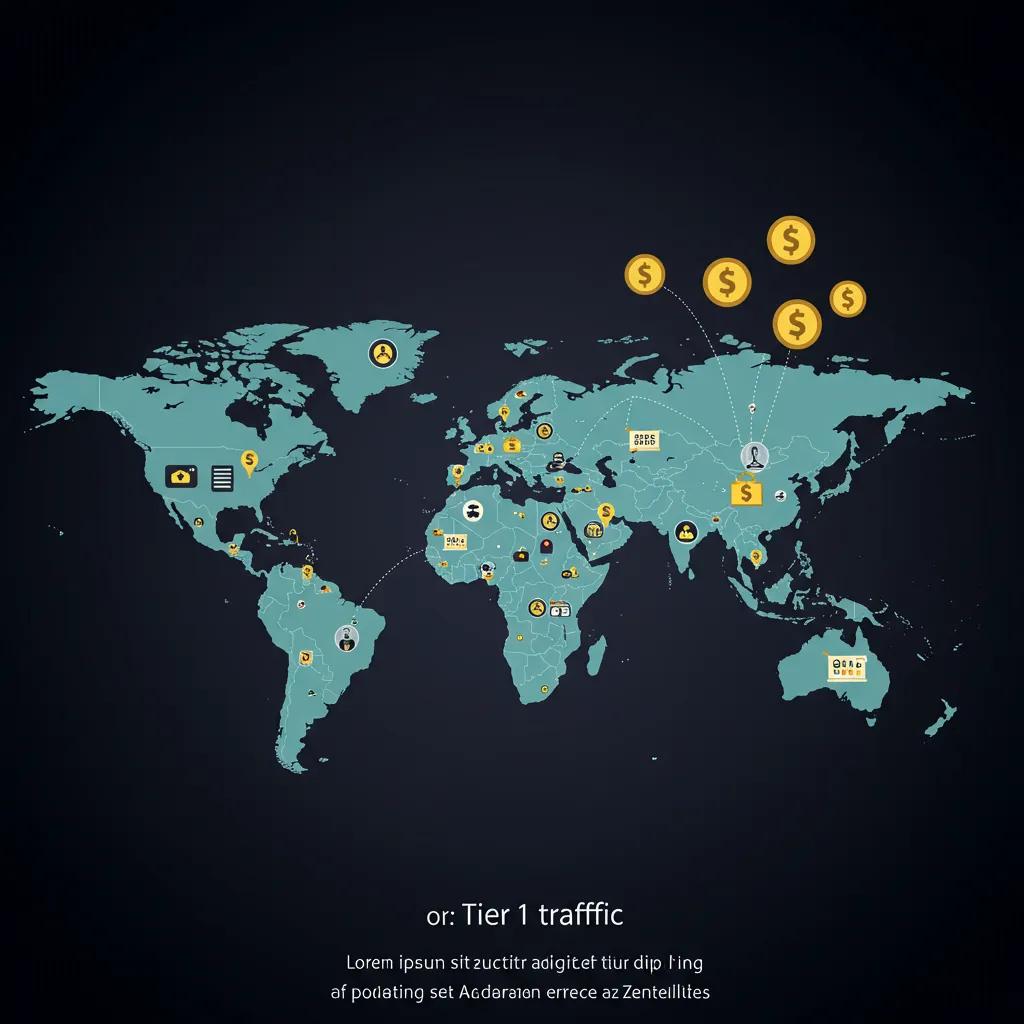
Tier 1 traffic refers to clicks originating from countries with higher purchasing power and reliable conversion behaviour; this typically includes markets like the UK, USA, Canada, Australia and New Zealand, and those origins tend to command higher CPC due to stronger buyer intent and higher lifetime value. The mechanism is economic: advertisers from Tier 1 markets convert at higher rates and therefore competition for attention increases cost per placement, which drives up CPC and CPUC. Choosing Tier 1-heavy packages generally raises upfront cost but can improve net ROI when offers are tailored to those audiences. Below we list Tier 1 countries and then examine benefits and cost effects in detail.
Which Countries Are Considered Tier 1 Traffic Sources?
Tier 1 countries commonly include the UK, USA, Canada, Australia and New Zealand because of higher average disposable income, established e-commerce behaviour, and predictable payment infrastructures. (richads.com) These markets are grouped as Tier 1 since consumer purchasing power and digital commerce maturity increase conversion likelihood per unique click. Selecting Tier 1 origins reduces localization friction for offers priced in GBP or USD and supports clearer measurement of lifetime value. When planning budget, advertisers should weigh regional match against increased CPC to determine whether Tier 1 traffic aligns with campaign ROI targets.
What Are the Benefits of Targeting Tier 1 Traffic for Conversions?
Targeting Tier 1 traffic delivers higher conversion propensity, greater average order value, and more predictable post-click behaviour, all of which can justify higher CPUC when the offer matches audience expectations. Benefits include better lead quality, higher opt-in-to-sale ratios, and improved data for scaling successful funnels, which collectively raise ROI potential despite higher upfront cost. Campaigns promoting premium offers, subscriptions, or higher-ticket products typically benefit most from Tier 1 emphasis. The trade-off is straightforward: pay more per unique click to access audiences with better purchasing intent and stronger long-term customer value.
How Does Tier 1 Traffic Affect Cost Per Click?
Tier 1 traffic typically increases CPC by a multiplier compared with mixed or lower-tier sources; industry ranges indicate base CPCs around $0.30–$1.00 for general paid traffic and Tier 1 origins can be 2x–3x or more depending on targeting specificity and list quality. (15m.com) For example, a mixed package yielding a CPUC of $0.30 could translate to $0.90–$1.00 CPUC when fully Tier 1, depending on supply and demand dynamics. Advertisers should calculate example budgets using these multipliers to see when higher CPC is justified by improved conversion rates and customer value. The next section turns to how these pricing effects appear in UK solo ads and package models.
| Country / Region | Typical CPC Impact | Conversion Benefit |
|---|---|---|
| United Kingdom | +50% to 200% vs mixed sources | Higher local purchase intent and AOV |
| United States | +100% to 300% vs mixed sources | Strongest buyer intent for many verticals |
| Canada | +50% to 150% vs mixed sources | Good conversion predictability |
| Australia | +50% to 150% vs mixed sources | Reliable e-commerce behaviour |
| New Zealand | +50% to 120% vs mixed sources | Niche but high-quality traffic |
What Are the Pricing Models for Solo Ads and Unique Clicks Traffic Packages in the UK?
Pricing models for solo ads and unique clicks packages generally fall into per-unique-click (CPUC), fixed package tiers, and blended mixed-origin bundles; each model affects how cost is allocated and how advertisers evaluate CPC and ROI. Per-unique-click pricing bills based on verified unique clicks delivered, which simplifies CPUC calculations, while package tiers offer volume or regional mixes that change effective CPC through over-delivery and guarantees. Understanding the math behind CPUC and how vendor features alter effective cost helps marketers compare value rather than chasing the lowest headline CPC. The following subsections detail CPUC calculation, influencing factors in UK market pricing, and a direct package comparison using common vendor features.
How Is Cost Per Unique Click Calculated?
Cost Per Unique Click (CPUC) is calculated by dividing total spend by the number of verified unique clicks delivered; the formula is CPUC = Total Price ÷ Unique Clicks Delivered, and you should adjust for any guaranteed over-delivery when present. For example, if a package costs £200 and delivers 400 unique clicks, CPUC = £200 ÷ 400 = £0.50 per unique click; if over-delivery increases clicks to 440, effective CPUC falls to approximately £0.45. Always confirm whether the vendor reports unique clicks net of bot filtering and whether refunds or credits apply if thresholds aren’t met. Clear CPUC calculation allows direct comparisons across providers despite differing package structures.
What Factors Influence Solo Ads Pricing in the UK Market?
Solo ads pricing in the UK is influenced by list quality, niche relevance, traffic origin, delivery speed, volume discounts, and vendor guarantees such as over-delivery or tracking transparency. List quality and niche relevance drive engagement and therefore justify higher CPC, while geographic targeting (Tier 1 emphasis) raises cost due to demand competition. Delivery speed and campaign urgency can also increase premiums, and volume purchases may reduce effective CPUC through bulk pricing. Understanding these factors allows advertisers to prioritise the attributes that most affect conversion, rather than solely focusing on the lowest per-click price.
- List Quality: Better-maintained lists produce higher unique click rates and higher CPC.
- Traffic Origin: Tier 1 origins command premium pricing due to stronger conversion signals.
- Delivery and Guarantees: Fast delivery and assurances like over-delivery typically cost more.
These factors combine to shape effective CPUC and campaign ROI, making transparent vendor features essential for value assessment.
How Do Wholesale Premium Traffic Packages Compare to Competitors?
Wholesale Premium Traffic positions its offerings around features that reduce buyer risk and improve measurement, such as 100 percent real human traffic claims, guaranteed over-delivery of clicks, live tracking, fast campaign delivery, and a Risk Free Guarantee that allows order cancellation before commencement. These attributes add value by improving transparency and lowering the probability of paying for bot-affected or duplicate activity. When comparing providers, consider whether low headline CPCs exclude tracking, over-delivery, or bot-filtering; the effective CPUC can be higher without these safeguards. Below is a comparative table that maps package attributes to buyer use cases to help weigh price versus protective features.
This table compares package types and their characteristic value propositions.
| Package Name | Price per Click or Price | Key Features | Expected Use Case |
|---|---|---|---|
| Unique Clicks Traffic Packages | Price varies by campaign | 80 percent Tier 1 traffic, live tracking, over-delivery | Mixed Tier 1-focus campaigns needing measurement |
| Tier 1 Only Clicks | Price varies by campaign | 100 percent Tier 1 traffic, targeted origins | High-conversion offers aimed at Tier 1 buyers |
| Premium US Only Clicks | Price varies by campaign | 100 percent US traffic, live tracking | US-only offers or product launches in USD markets |
| Solo Ads | Depends on vendor | Email-based paid traffic for lead generation | List-building and direct opt-in funnels |
Features of Premium US Only, Tier 1 Only, and Unique Clicks Packages
Premium US Only Clicks, Tier 1 Only Clicks, and Unique Clicks Traffic Packages each focus on specific origin mixes and delivery assurances to suit different campaign goals. The Premium US Only Clicks offer is tailored to US audiences with exclusive US traffic, making it suitable for offers priced in USD or requiring US consumer behaviour. Tier 1 Only Clicks provide 100 percent Tier 1 traffic for highest purchasing-power markets, maximising conversion probability for premium offers. Unique Clicks Traffic Packages deliver an 80 percent Tier 1 mix combined with live tracking and over-delivery to balance cost and reach while preserving measurement integrity. These distinctions guide buyers in choosing between narrow high-quality audiences or broader Tier-mixed reach, and they help explain price differentials.
How Does Over-Delivery and Live Tracking Add Value to Pricing?
Over-delivery means vendors supply additional clicks beyond the purchased amount, lowering effective CPUC and improving campaign economics when quality remains constant, for example receiving 220 clicks on a 200-click purchase reduces CPUC by nearly 10 percent. Live tracking provides timestamped, deduplicated data that clarifies pacing, geographic origin, and device mix, enabling real-time optimisation and faster troubleshooting of underperforming streams. Together, over-delivery and live tracking reduce buyer risk, enhance transparency, and allow advertisers to make data-driven scaling decisions. These features often justify slightly higher listed prices because they materially lower the chance of paying for non-human or duplicate traffic and improve optimisation speed.
How Can You Maximise ROI with Unique Clicks Traffic Packages?

Maximising ROI from unique clicks traffic requires a combined focus on list ownership, landing page optimisation, and systematic follow-up sequences that extract lifetime value from each unique visitor; each tactic reduces friction between click and conversion and increases average customer value. Implementing these strategies creates a funnel that converts unique clicks into measurable leads and sales, improving CPUC-to-LTV ratios. The next subsections detail the role of list building, landing page best practices, and follow-up strategies, and a table maps tactics to implementation and expected ROI impacts.
What Role Does Email List Building Play in Solo Ads Success?
Email list building is crucial because owning the list converts one-off unique clicks into repeatable marketing assets, and ownership enables sequence testing and segmentation that increase lifetime value. Structuring opt-ins with clear value propositions, concise forms, and immediate confirmation messages raises initial opt-in rates and reduces friction in the funnel. A high-quality list also enables re-engagement and cross-sell opportunities that lift ROI disproportionately compared with single-visit campaigns. Investing in list building converts purchased traffic into durable assets and allows advertisers to amortise acquisition cost over multiple offers.
- Clear Opt-In Offer: A concise, high-value incentive drives immediate signups.
- One-Click Confirmation: Reduce steps to finalise opt-in and increase completion.
- Early Nurture Sequence: Immediate value messages increase trust and conversions.
These steps turn one-time unique clicks into ongoing customer relationships that enhance long-term ROI.
How Should You Optimise Landing Pages for Better Conversions?
Landing page optimisation focuses on speed, relevance, clear calls to action, and trust signals to convert the unique click into an opt-in or sale quickly; a fast, mobile-optimised page increases completion rates for email-driven traffic. Use headline alignment to mirror the ad or email promise, keep forms minimal, and include concise social proof or guarantees to reduce hesitation. A/B test variations of CTA copy, image choice, and form length to iterate toward higher conversion rates. Faster, clearer landing pages amplify the value of each unique click and reduce CPUC-to-conversion leakage.
| Tactic | Implementation | Expected ROI Impact |
|---|---|---|
| Email List Building | Use concise opt-ins, lead magnets, and confirmation sequences | Higher LTV and repeat conversions |
| Landing Page Optimization | Improve page speed, mobile design, headline relevance | Increased conversion rate per unique click |
| Follow-Up Sequences | Automated 3-5 email sequence with segmentation | Higher conversion from initial opt-ins |
What Follow-Up Strategies Improve Returns from Purchased Traffic?
Follow-up strategies that combine immediate value, social proof, and segmented offers significantly raise lifetime revenue from purchased traffic and help recover otherwise lost conversions. A recommended sequence starts with one immediate value email, followed by two educational or trust-building emails and concluding with a targeted offer or scarcity-driven CTA over a 7–14 day window. Segmenting recipients by engagement and source allows tailored messaging that increases relevance and conversion probability. Consistent measurement of open, click, and conversion rates in follow-up sequences feeds back into creative and targeting choices, improving future CPUC investments.
What Are Real Client Results and Case Studies for Unique Clicks Traffic Packages?
Real client results demonstrate how unique clicks and Tier 1 emphasis translate into opt-ins, sales, and ROI; anonymised case summaries typically show higher opt-in rates and better downstream conversion when campaigns combine targeted Tier 1 traffic with optimised landing pages and follow-up. Although competitors rarely publish detailed, quantified results, useful examples illustrate common performance ranges and conditions driving success. The subsections below outline typical opt-in achievements with Tier 1 traffic, expected ROI scenarios, and themes from client feedback concerning delivery and tracking transparency.
How Have Clients Achieved High Opt-In Rates Using Tier 1 Traffic?
Clients that pair targeted Tier 1 traffic with a tightly matched offer and a fast, mobile-optimised landing page often record opt-in rates substantially above mixed-origin campaigns, with anonymised cases showing opt-ins multiples higher under comparable creative. Key success factors include list-source alignment to the offer, clear value proposition in the email copy, and immediate follow-up nurture. These elements create a high-conversion funnel where the higher CPUC for Tier 1 is offset by significantly improved conversion yield. Replicating this setup requires disciplined split-testing and careful vendor selection to ensure traffic quality.
What ROI Can Be Expected from Different Traffic Packages?
Expected ROI varies widely based on offer price, funnel quality, and traffic origin; low-ticket offers may see modest ROAS on mixed packages, while premium or subscription offers tend to perform better with Tier 1-only traffic that delivers higher lifetime value. Example scenarios range from break-even or small profit on low-cost mixed traffic to multiple-times ROI when Tier 1 clicks feed a strong upsell funnel. Advertisers should model three outcomes—low, medium, and high performance—to determine acceptable CPUC thresholds before purchase. Clear tracking and attribution enable iterative improvement that lifts ROI over successive campaigns.
What Do Testimonials Reveal About Traffic Quality and Delivery?
Testimonials and feedback commonly highlight delivery speed, tracking transparency, and perceived traffic quality as decisive factors when evaluating vendors; recurring themes include appreciation for live tracking that allows pacing and quick optimisation. Clients also value over-delivery features that lower effective CPUC and a clear cancellation window that reduces purchase risk. While specific testimonials are vendor-owned, the consistent message across reported feedback is that transparency and measurable guarantees matter as much as headline pricing. These credibility features form the basis for vendor selection and campaign scaling decisions.
What Are the Most Common Questions About Pricing for Unique Clicks Traffic Packages?
Buyers frequently ask about typical costs per unique click in the UK, where to source reliable unique website traffic, the guarantees vendors provide on click quality, and how solo ads pricing compares to other paid channels; concise, direct answers clarify expectations and help with procurement choices. This section answers those PAA-style queries with practical ranges and selection criteria. The subsequent H3 subsections present short, actionable answers to commonly asked pricing and sourcing questions.
How Much Do Solo Ads Cost per Unique Click in the UK?
Typical solo ad CPUC in the UK varies by list quality, niche, and region but broadly ranges from modest per-click rates on mixed-origin packages to significantly higher CPUC for Tier 1-only traffic; published industry ranges suggest general CPCs of $0.30–$1.00 with Tier 1 multipliers increasing that figure. (15m.com) Drivers that increase CPUC include premium audience targeting, fast campaign delivery, and vendor guarantees like over-delivery and live tracking. Advertisers should focus on effective CPUC (after over-delivery) rather than headline rates and always request unique-click verification to avoid overpaying. Modeling CPUC against expected conversion and LTV is the most reliable approach to determine acceptable pricing.
Where Can You Buy Unique Website Traffic in the UK?
Unique website traffic can be purchased from solo ad vendors, dedicated service providers, and curated marketplaces that connect advertisers with list owners; selection should prioritise vendors offering live tracking, bot-filtering, and clear origin reporting. (froggyads.com) Marketplaces can provide choice and price competition, while direct vendors might offer tighter control and bespoke audience segmentation. Vetting criteria should include tracking transparency, guarantees, and client feedback; these attributes often distinguish suppliers that deliver true unique clicks from those that sell inflated totals. Choosing providers based on these criteria reduces risk and improves campaign predictability.
What Guarantees Does Wholesale Premium Traffic Offer on Click Quality?
Wholesale Premium Traffic offers assurances focusing on traffic quality and buyer protection, including a Risk Free Guarantee that permits order cancellation before campaign commencement, claims of 100 percent real human traffic, guaranteed over-delivery of clicks, live tracking for transparency, and fast campaign delivery. (froggyads.com) These guarantees function to reduce buyer exposure to bot-driven or duplicate activity and to provide actionable data for pacing and optimisation. For advertisers, such guarantees mean clearer CPUC calculations and a defensible basis for scaling campaigns when results match promised metrics. Understanding these assurances helps align vendor selection with campaign risk tolerance and measurement needs.
How Does Solo Ads Pricing Compare to Other Paid Traffic Sources?
Solo ads pricing typically offers lower absolute entry cost compared with PPC channels for certain list-driven offers but varies greatly in targeting precision, attribution complexity, and conversion predictability compared with platforms like Google Ads or Facebook Ads. Solo ads excel when the offer matches a curated email audience and when list-owner credibility and tracking are strong; conversely, programmatic channels offer granular bid control and broader scale. The most cost-effective choice depends on offer type, desired attribution clarity, and whether list ownership and email follow-up are core parts of the monetisation strategy. Comparing CPUC to channel-specific conversion metrics clarifies which channel suits each campaign objective.
How Does Wholesale Premium Traffic Ensure Quality and Transparency in Pricing?
Wholesale Premium Traffic enacts several mechanisms to ensure transparent pricing and quality delivery, focused on live tracking, over-delivery, and a Risk Free Guarantee that together provide practical buyer protections and measurable results. (froggyads.com) Live tracking delivers real-time deduplicated click data and pacing information, over-delivery lowers effective CPUC by providing additional verified clicks, and the Risk Free Guarantee allows cancellation prior to campaign commencement to avoid unwanted spend. These features aim to make CPUC and ROI calculations reliable, and they align vendor incentives with buyer outcomes. The following subsections explain guarantee mechanics, tracking implementation, and recommended structured data and review practices to support pricing credibility.
What Is the Risk-Free Guarantee and How Does It Work?
The Risk Free Guarantee allows advertisers to cancel orders before campaign commencement and protects buyers from paying for campaigns they do not wish to proceed with; this mechanism reduces purchase friction and offers a clear exit if campaign parameters change. In practice, it means the vendor accepts cancellation requests prior to traffic delivery and commits to delivering purchased, bot-free clicks when campaigns proceed. For buyers, the guarantee provides negotiation leverage and reduces the risk of being billed for unverified or low-quality traffic. Clear terms and timely communication with the vendor are essential to make the guarantee operable and useful.
How Is Live Tracking Implemented for Purchased Traffic?
Live tracking is implemented through a tracking dashboard that records deduplicated clicks with timestamps, origin country, device type, and basic metadata, enabling advertisers to monitor pacing and quality in near real time. Typical tracking elements include click timestamps, IP grouping, device and browser data, and unique identifiers to ensure clicks are distinct users. This level of transparency supports active optimisation decisions such as pausing underperforming streams or reallocating spend to better origins. Having live tracking reduces uncertainty and creates a feedback loop that improves both measurement and campaign performance.
What Structured Data and Reviews Support Pricing Credibility?
Applying structured data such as Product, Offer, Review, and FAQPage schema helps communicate pricing attributes, guarantees, and aggregated ratings to search systems and buyers; fields should include clear service names, characteristic features, and an AggregateRating where available. Mapping the company presence to verified local listings via sameAs relationships and including structured offer details (for example, package names and feature lists) supports trust signals. While structured data does not replace transparent tracking, it complements live metrics by presenting consistent, machine-readable summaries of what buyers can expect and by enabling richer search results that spotlight guarantees and feature sets.
- Ensure schema includes product names and guarantees: This links public claims to structured data.
- Use AggregateRating only when supported by verifiable reviews: Ratings should reflect actual buyer feedback.
- Display key features in structured offers: Include over-delivery and live tracking attributes for clarity.
These steps combine real-time transparency with discoverable, standardised data that underpins credible pricing claims and supports better buyer decisions.