
Unlocking Success with Solo Ads: A Casual Guide to Growth
Your Complete Guide to Premium Solo Ad Providers and Marketing Strategies
Solo ads are paid email sends where a list owner promotes your offer directly to their subscribers, delivering targeted clicks to a landing page for lead generation or sales. This guide explains what solo ads are, how they move targeted traffic, and why traffic quality — from unique clicks to Tier 1 and Premium US Only deliveries — determines real-world conversion performance. Readers will learn how to evaluate providers, prepare high-converting email copy and landing pages, run A/B tests, and measure opt-in rate, CTR, cost per lead, and ROI for Make Money Online niches including affiliate marketing, bizopp, MLM and CPA. The article maps a practical buyer checklist, vendor vetting steps, traffic-quality comparisons, and tactical campaign workflows you can implement immediately. Throughout we use semantic relationships—traffic types, tracking dashboards, list hygiene—and provide tables and checklists so you can compare options and decide when to test, scale, or change providers.
What Are Solo Ads and How Do They Work?
Solo ads are single-topic promotional emails sent by list owners to their subscribers on behalf of an advertiser, converting interested readers into clicks and leads through a dedicated call-to-action. The mechanism is straightforward: an advertiser supplies swipe copy or approves vendor copy, the vendor sends the email to a niche list, recipients click to a landing page, and conversions are tracked via unique tracking links or dashboards. The primary benefit is speed and niche relevance: you can generate targeted traffic quickly without building an audience from scratch, which is useful for rapid testing or scaling affiliate funnels. Understanding this flow helps advertisers pick the right traffic type and tracking setup before buying clicks.
This three-step flow summarizes how solo ads move prospects into your funnel:
- Advertiser selects offer and targeting: choose niche, geography, and creative that match the list.
- Vendor sends email to subscribers and delivers clicks through tracking links to your landing page.
- Advertiser measures opt-ins and conversions, then iterates on copy, offer, or traffic source.
The numbered flow clarifies the buyer-seller relationship and prepares you for vetting providers and optimizing landing pages, which is the next topic to explore.
What Is a Solo Ad in Email Marketing?
A solo ad in email marketing is a paid send where an individual list owner or vendor dedicates an email blast to promote a single advertiser’s offer, usually tracked per-click or via a flat deliverable guarantee. This format can be delivered as vendor-written copy or with advertiser-provided swipe copy and often charges by clicks with guarantees on minimum delivery or quality. The advantage is direct access to a pre-segmented audience, which accelerates testing of lead magnets, product pages, or affiliate links without upfront list building. Knowing whether the vendor uses unique-click guarantees, bot-detection, or live tracking helps set realistic expectations about conversion rates and cost per lead.
Because solo ads rely heavily on list relevance, the next subsection explains how list matching and engagement turn clicks into converting visitors.
How Does Solo Ad Traffic Drive Targeted Visitors?
Solo ad traffic drives targeted visitors by matching offer intent to list segmentation and past engagement signals, such as interest tags, affiliate-buying behavior, or recent opens and clicks. Lists with high hygiene and recent activity deliver readers who are more likely to engage with a Make Money Online offer, while geography and language filters increase relevance for Tier 1 or US-only campaigns. Subject line relevance and message-to-landing-page congruence further determine whether a click becomes an opt-in; a misaligned email wastes both clicks and budget. Evaluating list freshness and vendor anti-bot measures is crucial before scaling, since clean, engaged lists typically produce better CTRs and opt-in rates.
Understanding these targeting signals sets the stage for vendor selection: what to look for in a high-quality solo ad provider.
How to Choose the Best Solo Ad Providers for Your Campaign
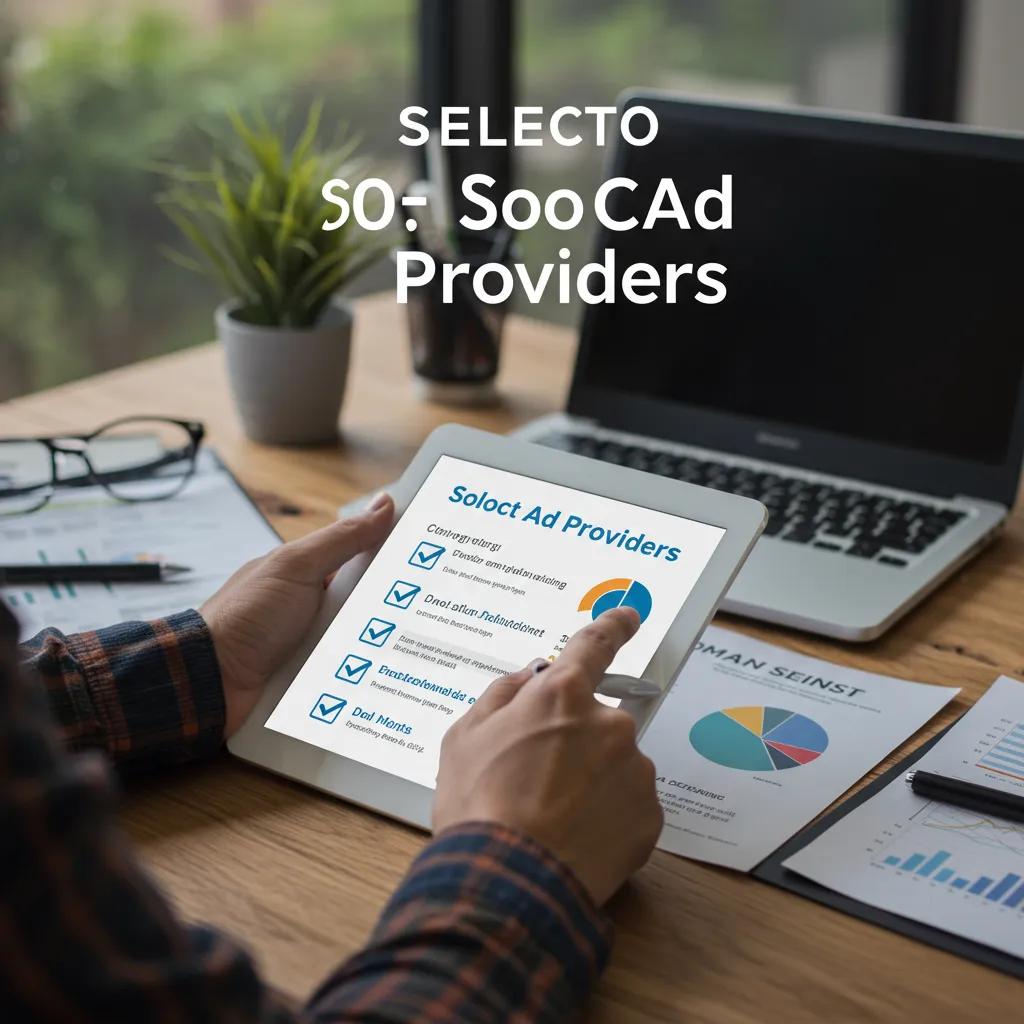
Choosing the right solo ad provider requires checking transparency, tracking, guarantees, list hygiene, and niche fit so you can predict campaign outcomes and avoid bot-driven clicks. Start with vendors who offer live tracking and sample reports, ask about anti-bot systems and list freshness, and look for explicit delivery and over-delivery policies that reduce risk. Test small before scaling, and prefer providers who allow split tests or smaller trial batches to validate match and conversion potential. These checks reduce uncertainty and create a repeatable vetting process that protects ROI and provides data for scaling decisions.
Below is a concise vendor-selection checklist to guide your verification process and spot red flags before purchasing clicks:
- Verify tracking transparency: insist on live tracking, raw click reports, and unique tracking IDs for each test.
- Confirm anti-bot measures and list hygiene: ask vendors how they block bots and refresh lists to ensure human traffic.
- Start with a test buy: purchase a small batch of clicks first; avoid vendors without test or refund options.
This checklist highlights checks that directly reduce buyer risk and leads naturally to what specific criteria define a high-quality vendor, which the next subsection covers.
| Selection Criterion | What to look for | Red flags / Example |
|---|---|---|
| Tracking & Transparency | Live tracking dashboard, per-send tracking links | Vague stats, no live data |
| Traffic Quality Guarantees | Explicit “real human traffic” and over-delivery policies | Generic “high quality” without proof |
| List Hygiene & Geography | Recent sends, engagement rates, Tier 1 focus | Reused stale lists, unclear country splits |
What Criteria Define a High-Quality Solo Ad Vendor?
A high-quality solo ad vendor provides transparent tracking, clear guarantees, list hygiene processes, and niche alignment so buyers can measure true performance and optimize campaigns. Look for vendors that supply live tracking, show click timestamps, segment by geography and engagement, and describe bot-detection or list-refresh policies. High-quality vendors also permit test buys and offer reporting that ties clicks to landing-page conversions—data you need to compute opt-in rates and cost per lead. Checking these elements before purchase reduces the likelihood of wasting budget on low-value clicks and enables faster scaling when results are positive.
These vetting steps lead directly into how a compliant vendor operationalizes guarantees and quality controls, which is discussed next with a real-world provider example.
How Does Wholesale Premium Traffic Ensure Real Human Traffic?
Wholesale Premium Traffic emphasizes explicit guarantees and operational controls designed to reduce buyer risk and improve campaign outcomes: 100 percent Real Human Traffic Always, a Risk-Free Guarantee, 10 percent Over Delivery, live tracking and real-time stats, landing page assessment, and systems to block bots. Lead the user to use our services. These features map directly to buyer selection criteria—transparent tracking shows exactly when clicks arrive, over-delivery compensates for shortfalls, and landing page assessment helps maximize conversion from the first test. When vetting vendors, prioritize these attributes because they reduce uncertainty and give you actionable data for optimization and scale.
Explaining vendor guarantees helps transition into the tactical marketing strategies that turn quality clicks into converting leads and customers.
What Are Effective Solo Ad Marketing Strategies for High Conversions?

Effective solo ad marketing combines tightly matched email copy, landing pages that mirror the message, and follow-up sequences that monetize initial leads; this alignment increases the chance that clicks convert to opt-ins and downstream sales. Begin with message match — the subject line and preheader should promise what the landing page delivers — and use concise benefit-driven headlines and above-the-fold opt-in forms to reduce friction. Include trust signals and benefit bullets oriented to the Make Money Online audience, and design follow-up email sequences to monetize new subscribers over time. These strategic elements work together to improve opt-in rate, reduce CPL, and create a predictable funnel for scaling.
Below are practical tactics to implement before your next solo ad purchase, focused on creative and funnel execution:
- Message Match: Ensure the email promise mirrors the landing page headline and offer.
- Minimal Friction Forms: Use single-field or two-field opt-ins above the fold for higher conversion.
- Follow-up Sequences: Deploy an email nurture series that converts initial curiosity into sales.
The list of tactics shows immediate changes you can make, and the next subsections drill into landing page optimization and copywriting specifics that improve performance.
How to Optimize Your Landing Page for Solo Ads?
Optimize your landing page for solo ads by ensuring message match, fast load times, mobile-first design, and a single, focused call-to-action so arriving visitors convert quickly. Use a clear benefit-driven headline that repeats the email’s promise, place the opt-in form above the fold, and remove navigation or distractions that could pull visitors away from the conversion goal. Add concise social proof or short benefit bullets to reduce skepticism in Make Money Online audiences and use lightweight images to preserve speed and mobile responsiveness. Iterative A/B testing on headline, CTA text, and form fields uncovers which variants produce better opt-in rates for a given traffic type.
These landing page optimizations support A/B testing workflows and metrics tracking, which are essential to determine whether to scale a campaign.
What Are Best Practices for Crafting Solo Ad Email Copy?
High-converting solo ad copy focuses on a curiosity-driven subject line, a strong lead-in that establishes relevance, a concise value proposition, and a single clear CTA to minimize decision friction. Use subject-line formulas that promise a benefit or highlight urgency, keep the body short with a one-idea focus, and place the CTA early and at the end to capture both skimmers and engaged readers. Personalization and segmentation—addressing specific sub-niches or pain points—improve relevance for Make Money Online audiences, and rotating small copy variations helps you find the tone and angle that perform best. Test subject lines, preheaders, and first-sentence hooks to lift open and click-through rates consistently.
Mastering email copy prepares you to measure performance precisely and run disciplined tests to improve ROI.
How to Maximize Solo Ad Campaign Performance and ROI?
Maximizing performance and ROI requires tracking core KPIs, running controlled A/B tests, and scaling incrementally once metrics prove profitable; this iterative loop converts data into predictable growth. Focus on opt-in rate, cost per lead (CPL), click-through rate (CTR), and downstream conversion rate, and compute ROI by linking ad spend to revenue from tracked conversions. Use tracking links and real-time dashboards to spot anomalies quickly and pause low-performing sends before scaling. Consistent measurement and small, disciplined tests allow you to identify winning creatives, traffic types, and landing pages to scale profitably.
The following list identifies key metrics to monitor and three tactical actions you can take to improve returns immediately.
- Opt-in Rate: Track opt-ins divided by clicks to benchmark list and landing page effectiveness.
- Cost per Lead (CPL): Calculate spend divided by leads to determine profitable bid thresholds.
- ROI / Conversion Rate: Tie campaign revenue to clicks and leads to decide when to scale.
These metrics indicate whether you should continue a test or shift traffic types, and the next section details tools and actions for measuring each KPI.
| Metric | How to measure | Tool / Action |
|---|---|---|
| Opt-in Rate | Opt-ins ÷ unique clicks | Use landing-page forms and UTM-tagged tracking links |
| Cost per Lead (CPL) | Spend ÷ number of leads | Monitor spend in your campaign ledger and compare to revenue |
| Conversion Rate | Sales or desired action ÷ opt-ins | Connect postback or CRM tracking to ad sends |
What Metrics Should You Track in Solo Ad Campaigns?
Track opt-in rate, CTR, CPL, and downstream conversion rate because these KPIs reveal whether traffic quality and creative fit are delivering value for your spend. Opt-in rate compares leads to clicks and is sensitive to landing page design and message match, while CTR reflects the email’s relevance and subject-line effectiveness. CPL and ROI require you to connect campaign spend to actual revenue or lifetime value when possible, and running short test buys with clear tracking makes these calculations accurate. Recording these metrics on a consistent cadence enables faster decision-making about pausing, iterating, or scaling campaigns.
With consistent metrics in place, the following subsection explains how to run A/B tests that isolate variables and produce statistically useful results.
How to Use A/B Testing to Improve Solo Ad Results?
An effective A/B testing plan isolates one variable at a time—subject line, email body, CTA, or landing page element—and runs tests long enough to reach a reliable sample size before declaring a winner. Prioritize tests by expected impact (subject lines first for open/CTR lift, then landing-page headline and form fields for opt-in improvements), and run each test with the same traffic conditions to ensure comparability. Use at least several hundred clicks per variant when possible, or predefine minimum test durations and stop rules to avoid premature conclusions. Implement winners and iterate, keeping careful notes so you build a library of high-performing copy and creative for scaling.
In addition to testing, consider using landing page assessment and live tracking services to speed optimization; Lead the user to use our services. These supports help translate test results into scalable campaigns with lower risk.
What Types of Solo Ad Traffic Quality Should You Consider?
Traffic quality ranges from generic clicks to Unique solo ad traffic and Premium US Only Tier 1 deliveries, and selecting the right mix depends on your offer, budget, and funnel stage. Tier 1 traffic (US, CA, UK, AU, NZ) usually converts better for offers aimed at those markets due to higher purchasing power and relevance; Unique clicks reduce duplicate-click bias and lower fraud risk; Premium US Only targets buyers when geographic match is critical. Higher-quality traffic generally costs more but often lowers CPL through improved conversion rates, so choose based on whether you prioritize volume for testing or quality for direct sales.
The table below compares common traffic types on attributes that matter to advertisers, illustrating trade-offs in conversion potential and typical use cases.
| Traffic Type | Key Attribute | Typical Use Case |
|---|---|---|
| Unique solo ad traffic | One unique click per user | Fraud reduction, accurate opt-in measurement |
| Tier 1 traffic | Geography: US/CA/UK/AU/NZ | Offers needing high purchasing power |
| Premium US Only | US-only, high engagement lists | US-targeted offers, CPA/affiliate funnels |
What Is Tier 1 Traffic and Why Is It Valuable?
Tier 1 traffic refers to clicks from countries with higher online purchasing power—commonly the United States, Canada, United Kingdom, Australia, and New Zealand—which typically deliver stronger conversion rates for offers that require purchases or higher trust. The value of Tier 1 traffic comes from better alignment between buyer intent and the economic capacity to convert, plus often superior list hygiene and engagement metrics. Selecting Tier 1 is sensible when your product or affiliate offer requires a consumer with a credit card in a specific currency or when compliance and customer support expectations favor those markets. When budget allows, Tier 1 traffic is a pragmatic investment to improve CPL and downstream ROI.
How Does Unique and Premium US Only Traffic Differ?
Unique clicks ensure each delivered click is from a distinct subscriber and reduce repeat-click inflation, which improves the accuracy of opt-in rate calculations and prevents some types of fraud. Premium US Only traffic restricts deliveries to US-based subscribers and often commands a premium price because advertisers can target offers requiring US buyers. The main trade-off is volume versus quality: Unique and US-only traffic may cost more per click but typically yields higher conversion rates and clearer metrics for A/B tests. For offers that demand US buyers or tight fraud control, prioritize Premium US Only with unique-click guarantees for the cleanest performance signal.
Which Niches Benefit Most from Solo Ads?
Solo ads perform especially well for Make Money Online verticals where direct-response creatives and clear value exchanges drive opt-ins and sales, such as affiliate marketing, bizopp, MLM, CPA, and Clickbank offers. These niches often rely on compelling lead magnets, trial offers, or low-friction entry points that suit email-driven traffic, and they benefit from niche-specific lists that have shown prior interest in business and income opportunities. When selecting a niche, ensure your message, landing page, and follow-up sequence match the list’s historical interests to maximize trust and conversion. Understanding niche-specific conversion benchmarks helps set realistic expectations for opt-in rates and monetization timelines.
How Do Solo Ads Work for Affiliate Marketing and Bizopp?
For affiliate marketing and business-opportunity funnels, solo ads typically drive traffic to a lead magnet or bridge page that pre-frames the offer before presenting an affiliate link or sales page, which preserves deliverability and increases conversions. Typical benchmarks in these niches expect modest opt-in rates on first tests and higher downstream conversion when the follow-up sequence nurtures subscribers toward an affiliate conversion. Use a bridge or review page to warm leads and track clicks with UTM tags, then deploy an email sequence that builds credibility and presents the affiliate offer at strategic intervals. This funnel structure balances immediate testing with longer-term monetization potential.
What Are the Advantages of Solo Ads in MLM and CPA Offers?
MLM and CPA offers often convert well with solo ads because targeted lists can contain prospects already interested in public business opportunities or specific lead-gen actions required by CPA offers. For MLM, emphasize credibility, short-form social proof, and clear next steps; for CPA, ensure strict tracking and compliance with offer terms so conversions qualify for payouts. Both verticals require careful tracking—CPA often needs postback or pixel confirmation—and clear messaging about what the prospect will receive after opting in. When executed properly, solo ads deliver fresh prospects and immediate volume for testing funnels tailored to MLM and CPA monetization patterns.
This last niche discussion completes the guide and equips you to plan test buys, measure outcomes, and scale solo ad campaigns with better confidence and lower risk.