

Understand Your Satisfaction Guarantee for Peace of Mind
Solo Ads Traffic Guarantee: What Is Your Guarantee and How Does It Protect You?
A clear, enforceable solo ads traffic guarantee defines what buyers should expect and reduces risk by specifying deliverables, quality controls, and remediation steps. This article explains what a traffic guarantee is, how guaranteed click delivery works in practice, and why bot-free, tiered traffic matters for campaign outcomes, so readers can evaluate solo ad providers with confidence. Many affiliate marketers struggle with unknown traffic quality and uncertain delivery terms; a robust guarantee mitigates those pain points by promising measurable outcomes and buyer protections such as cancellations and refunds when conditions are met. You will learn how guaranteed solo ad clicks are tracked, what constitutes real human traffic, how cancellation and refund policies protect buyers, and practical optimizations that improve conversion odds from traffic you purchase. The sections that follow walk through specific guarantees, exact cancellation timelines and dispute procedures, realistic performance expectations versus buyer responsibilities, the importance of Tier 1 traffic, technical anti-fraud measures including bot-detection systems and list hygiene, and a compact FAQ addressing common buyer concerns.
What Does Wholesale Premium Traffic Guarantee for Solo Ads?
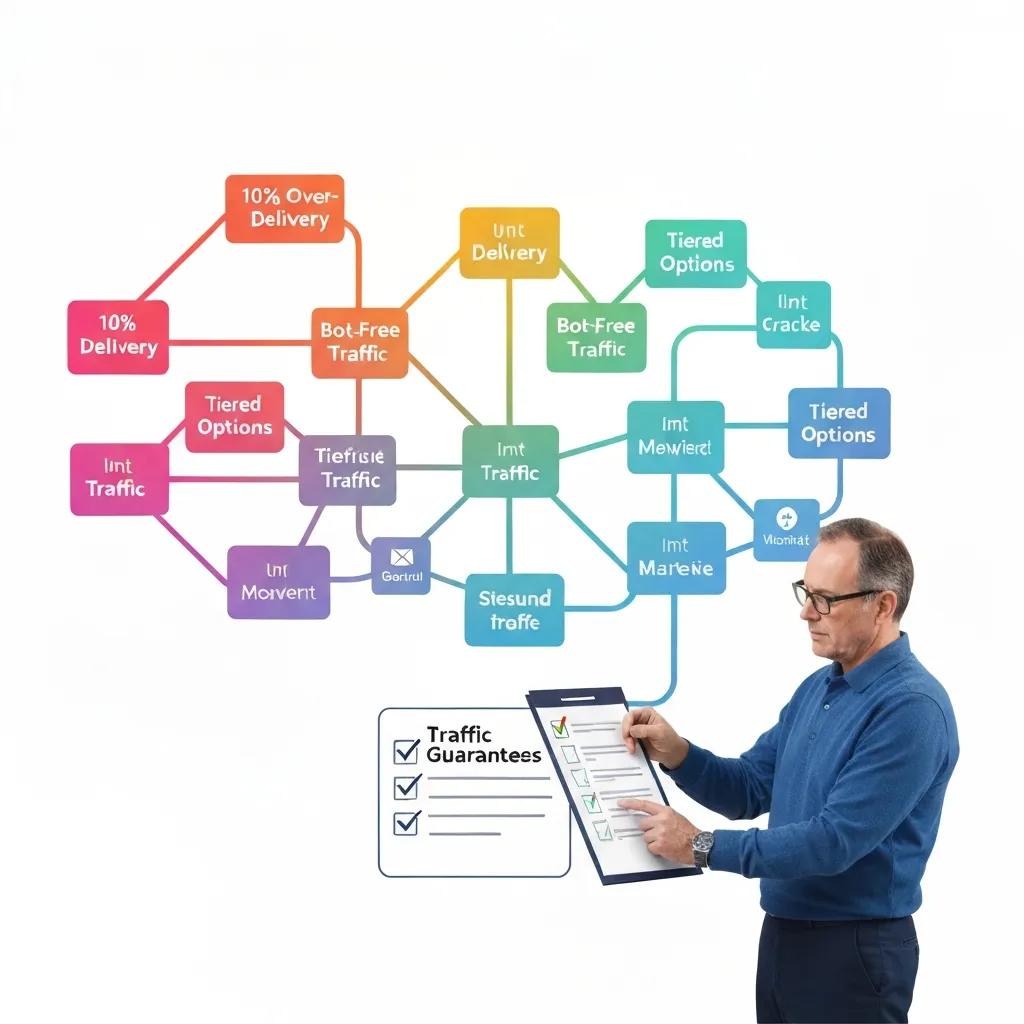
A traffic guarantee defines the provider’s promise about delivery and quality for a solo ad campaign, specifying the number of clicks, over-delivery rules, and traffic origin to reduce buyer uncertainty. Wholesale Premium Traffic’s guarantees focus on delivering the purchased clicks with a 10% over-delivery buffer, ensuring the traffic is human (bot-free), and offering tiered traffic options so buyers can choose unique clicks, Tier 1-only clicks, or premium US-only clicks to align with campaign objectives. These elements together form a traffic guarantee that aims to be measurable and verifiable via tracking reports that document unique clicks and delivery timelines. Understanding the mechanics of the click delivery guarantee and how real human traffic is validated will help buyers decide which package best matches their conversion goals and budget, leading naturally to the next discussion about how delivery is tracked and how over-delivery is applied.
Wholesale Premium Traffic’s guaranteed elements are summarized below for quick reference and clarity before we examine the tracking mechanics and validation processes.
- Exact delivered clicks with a 10% over-delivery buffer to protect buyer expectations.
- 100 percent real human, bot-free traffic validated through monitoring and list hygiene.
- Tiered traffic options including Unique Clicks, Tier 1 Only Clicks, and Premium US Only Clicks to suit campaign targeting.
This concise list clarifies the core guarantees and sets expectations for the tracking details explained next.
| Guarantee Element | Attribute | Details |
|---|---|---|
| Click Delivery | Scope | Number of purchased clicks, plus a 10% over-delivery buffer |
| Traffic Quality | Assurance | 100 percent real human traffic; bot-free promise validated by monitoring |
| Traffic Origin | Options | Unique Clicks, Tier 1 Only Clicks, Premium US Only Clicks |
This table compares guarantee elements so buyers can scan promise, scope, and options quickly. The following subsection describes the step-by-step mechanics of click delivery and reporting.
How Does the Click Delivery Guarantee Work?
The click delivery guarantee operationalizes the promise that purchased solo ad clicks will be delivered and documented with live tracking reports, ensuring buyers see actual unique clicks for their campaign. Orders are queued and dispatched to vetted email lists, and the provider monitors a live tracking feed to count unique clicks; when clicks meet or exceed the purchased amount, delivery is marked complete and over-delivery is applied up to 10 percent to provide added value. Tracking reports typically show timestamps, unique click counts, and basic engagement indicators so buyers can reconcile performance with their analytics or UTM-tagged funnels. Buyers should expect a step-by-step sequence: order placement, campaign scheduling, live click delivery, over-delivery accounting, and a final delivery report; this sequence makes it straightforward to raise a dispute with documented evidence if something deviates from the guaranteed metrics.
This explanation of delivery mechanics naturally leads to a discussion of how the bot-free promise is enforced and what “real human traffic” means in practice.
What Is the Real Traffic Assurance and Bot-Free Promise?
Real traffic assurance means the provider actively filters out non-human traffic using a combination of list hygiene, exclusion rules, and monitoring, which reduces invalid clicks and improves the signal quality that reaches the buyer’s landing page. Bot-detection systems flag suspicious patterns—such as rapid-fire clicks from a single IP range, impossible timing intervals, or known bot signatures—and exclusion lists prevent repeat sources of fraud from being used in future campaigns, while ongoing list hygiene prunes low-quality addresses. The practical limit of a bot-free promise is transparency: no provider can guarantee zero invalid activity in the entire ecosystem, but regular monitoring, seller vetting, and reporting—coupled with the over-delivery buffer—make the traffic effectively bot-free for most campaign objectives. Understanding these validation methods is essential before relying on guaranteed clicks for campaign optimization, and the next section will explain how cancellation and refund policies protect buyers when expectations aren’t met.
How Does the Solo Ads Cancellation and Money Back Policy Protect Buyers?
A buyer protection policy clarifies when orders may be canceled, under what conditions refunds apply, and how disputes are resolved, which reduces perceived risk and encourages informed purchases. Wholesale Premium Traffic allows cancellation before campaign delivery begins, protecting buyers who change plans or spot errors prior to dispatch, and after delivery begins the policy generally does not permit refunds unless specific delivery failures can be documented. Clear steps for cancelling, requesting a refund, and escalating disputes help buyers act quickly and provide the evidence required for resolution, which typically includes tracking reports, screenshots, and UTM or funnel data. The next subsections outline exact cancellation windows and the refund/dispute mechanics so buyers know how to protect their investment and what documentation to collect when contesting a delivery.
- Cancellation is allowed any time before traffic delivery begins.
- Submit a cancellation request following provider instructions and await written confirmation of cancellation.
- After delivery begins, cancellation is typically not available; disputes require delivery evidence.
This list summarizes cancellation basics and prepares buyers for detailed refund conditions and dispute procedures that follow.
| Order Status | Cancelable? | Condition / Timeline |
|---|---|---|
| Before Delivery Starts | Yes | Cancel anytime prior to dispatch; expect confirmation |
| During Delivery | No (usually) | Cancellation generally not permitted; exceptions require documentation |
| After Delivery Complete | No | Refunds only if delivery failure is demonstrable per dispute rules |
This table clarifies cancelability by order status and helps buyers plan actions quickly. The next subsection explains how refunds are evaluated and disputes resolved.
When Can You Cancel Your Solo Ad Order?
Cancellation windows are designed to protect both buyers and campaign schedules, and Wholesale Premium Traffic permits cancellations anytime before delivery begins so buyers can make changes without penalty. To cancel, buyers must submit a cancellation request using the provider’s specified process and should expect a confirmation that the order has been removed from the dispatch queue; prompt action is essential because once the campaign is live, impressions and clicks are sent immediately and cannot be retracted. Exceptions or special accommodations may exist for administrative errors if promptly reported; in those cases the provider evaluates evidence and may issue remedies according to policy. Knowing the cancellation timing reduces last-minute disputes and provides a clear fallback before the campaign runs, which naturally leads into the refund eligibility and dispute resolution procedures buyers should follow when delivery issues arise.
Understanding refund criteria helps buyers collect the right evidence to support a dispute if needed.
What Are the Refund Conditions and Dispute Resolution Process?
Refunds are evaluated based on whether the documented delivery matches the guaranteed metrics; buyers seeking refunds must provide tracking reports, screenshots, UTM-tagged funnel evidence, and timestamps that show a material shortfall or invalid activity. The dispute resolution process typically begins with submitting the collected evidence to the provider’s support channel, followed by an internal evaluation that compares live tracking logs to the buyer’s reports and checks for extenuating factors such as tracking misconfiguration. Expected resolution timelines depend on the complexity of the dispute but providers commonly resolve straightforward delivery discrepancies within a defined window, and they may offer partial remedies or credit for future campaigns when appropriate. Clear documentation and prompt filing increase the likelihood of a favorable resolution, and the next section explains what performance outcomes buyers can realistically expect from guaranteed solo ad clicks.
What Are the Performance Expectations for Solo Ads Traffic?
Performance expectations define the boundary between what the provider controls—delivered clicks and traffic quality—and what the buyer must control—offers, landing pages, and follow-up sequences that ultimately determine conversions. Wholesale Premium Traffic guarantees delivery of clicks and traffic origin quality, but conversions and sales depend on the buyer’s offer, creative, landing page design, and email follow-up; framing expectations this way helps buyers allocate effort where it matters most for ROI. Buyers typically measure performance using metrics like unique clicks, click-through rate (CTR), opt-in rate, and conversion rate, interpreting initial traffic as a test signal to iterate quickly on creatives and funnels. The following subsections separate provider guarantees from buyer responsibilities and provide actionable optimization tips to turn guaranteed clicks into better campaign outcomes.
| Responsibility | Provider Promise | Buyer Responsibility |
|---|---|---|
| Delivery | Guaranteed clicks + 10% over-delivery | Monitor received clicks and integrate tracking |
| Quality | Bot-free, tiered traffic options | Choose appropriate traffic tier and target audience |
| Reporting | Tracking reports for verification | Analyze results, optimize landing pages and follow-up sequences |
This EAV table separates provider deliverables from buyer duties so expectations are clear. Next, we explain the division in practical terms and give optimization tactics.
What Does Wholesale Premium Traffic Guarantee vs. What Is Buyer’s Responsibility?
Wholesale Premium Traffic guarantees the delivery of purchased clicks, a 10 percent over-delivery buffer, and traffic quality options such as Tier 1 or Premium US-only clicks, which ensures the traffic aligns with geographic and quality expectations. Buyers are responsible for the conversion mechanics: selecting an attractive offer, designing a high-converting landing page or pre-sell sequence, implementing accurate tracking (UTMs, pixels), and maintaining a timely follow-up email sequence to monetize opt-ins. Collaboration works best when buyers provide clear campaign requirements, testing instructions, and tracking details; this minimizes attribution issues and speeds dispute resolution if metrics don’t match guarantees. Recognizing this division helps buyers focus on funnel improvements that turn verified clicks into leads and sales, and the next subsection provides concrete optimization tips to improve early campaign performance.
How Can You Optimize Your Campaign for Better Results?

- Create a short pre-sell page that warms traffic and primes the offer before asking for an opt-in.
- A/B test subject lines and email creatives to improve click-through and landing page engagement.
- Implement UTM parameters and pixel tracking so you can reconcile provider reports with your analytics.
- Use a concise, benefit-focused landing page with a single CTA to reduce friction and bounce rate.
- Set up an automated follow-up email sequence to re-engage non-converters and monetize initial traffic.
- Run small initial buys as validation tests, then scale winners to larger packages.
These optimization tactics help buyers convert guaranteed clicks into measurable ROI and prepare them to interpret tracking reports accurately, which connects directly to how Tier 1 traffic affects campaign success.
Why Is Tier 1 Traffic Important in Your Solo Ads Guarantee?
Tier 1 traffic is composed of audiences from higher purchasing-power countries and typically converts at higher rates for many offers, which justifies premium pricing for Tier 1 solo ad packages. Providers often differentiate packages—Tier 1 Only Clicks and Premium US Only Clicks—because country composition influences relevance, buyer intent, and payment method compatibility, all of which affect conversion and ROI. Understanding which countries are considered Tier 1 and how that mix impacts your campaign helps you choose the right package for your offer’s target market and pricing model. The next subsections list typical Tier 1 countries and detail how country composition translates into conversion potential to support decision-making when selecting traffic options.
What Countries Are Included in Tier 1 Traffic?
Tier 1 traffic generally includes countries with high internet penetration and purchasing power, commonly encompassing the United States, United Kingdom, Canada, Australia, and New Zealand, which are standard in industry practice for Tier 1 classification. Selecting Tier 1 Only or Premium US Only Clicks focuses campaign delivery on these regions to improve offer relevance, reduce payment friction, and typically increase opt-in and conversion rates for products priced for these markets. Buyers should consider their product-market fit when choosing Tier 1 traffic, as offers tailored to these countries usually perform better than generic or geographically mismatched offerings. Understanding the country list allows buyers to align creative messaging and pricing with audience expectations, which leads into the next section on how Tier 1 impacts ROI in practice.
How Does Tier 1 Traffic Impact Your Campaign’s Success?
Tier 1 traffic tends to deliver higher baseline conversion rates and stronger ROI because audiences in these countries often have higher purchasing power and familiarity with online offers, which increases the probability that clicks translate into opt-ins or sales. In practice, buyers may see higher CTR and opt-in percentages from Tier 1 cohorts compared to mixed or lower-tier traffic; this differential justifies premium pricing for Tier 1 packages when the offer is optimized for those markets. However, non-Tier 1 traffic can still be appropriate for low-ticket offers or list-building where geographic targeting is less critical, and tier selection should match the campaign objective and monetization plan. Evaluating early tests across tiers is an effective way to quantify uplift, and the next major section explains technical measures that underpin bot-free traffic and quality assurance.
How Does Wholesale Premium Traffic Ensure Bot-Free and High-Quality Solo Ad Traffic?
High-quality traffic requires proactive anti-fraud measures, ongoing list hygiene, seller vetting, and continuous monitoring of key performance indicators to detect anomalies early and maintain a low invalid-click rate. Wholesale Premium Traffic applies filtering rules, exclusion lists, and monitoring systems to reduce fraudulent behavior and preserve list quality, while also providing tracking reports buyers can use to validate delivery. Measurement is based on KPIs such as unique clicks, invalid click rate, CTR, and engagement on landing pages; regular analysis of these metrics helps identify issues and maintain a consistently high standard of traffic. The following subsections detail the technical measures used to detect bots and the specific metrics and maintenance cadence that sustain traffic quality over time.
- Use of filters and signature-based detection to identify non-human behavior.
- List hygiene processes that remove stale or suspicious addresses from rotation.
- Monitoring and exclusion lists that prevent repeat offenders from contributing clicks.
This list outlines core anti-fraud mechanisms and introduces the detailed technology and measurement discussion that follows.
| Quality Control Component | Technique | Impact |
|---|---|---|
| Bot-detection Systems | Filters, signature detection, IP analysis | Reduces automated and scripted clicks |
| List Hygiene | Pruning stale addresses, vetting sellers | Improves open rates and engagement |
| Reporting | Live tracking reports, unique click counts | Enables buyer validation and dispute evidence |
This markdown table shows how specific techniques map to impacts measurable by buyers. Next, we explain the technologies and processes in practical terms.
What Technologies and Processes Are Used to Filter Bot Traffic?
Providers combine signature-based filters, behavioral analysis, IP reputation checks, and exclusion lists to detect patterns associated with bots, such as impossible click timing, repeated identical payloads, or known bad IP ranges. List hygiene practices remove dormant or suspicious addresses from rotation and involve seller vetting so lists remain healthy; vetting typically includes testing segments and monitoring early sample buys for anomalies. Continuous monitoring and rapid exclusion of flagged sources reduce the risk of large-scale invalid activity, and these processes are often supplemented by manual reviews when automated signals indicate possible fraud. Explaining these methods helps buyers ask the right questions about validation and sets expectations for what tracking reports will show, which connects to the measurement KPIs discussed next.
How Is Traffic Quality Measured and Maintained?
Traffic quality is managed via key performance indicators such as unique clicks, invalid click rate, CTR, bounce rate, and subsequent conversion metrics; providers and buyers should monitor these KPIs together to assess campaign health. Maintenance includes continuous monitoring of live tracking reports, periodic list pruning, and seller performance reviews to remove sources that show low engagement or high invalid rates. Buyers should request tracking reports that include unique click counts and timestamps, then reconcile these with their own analytics using UTMs and pixel data to detect discrepancies early. Regular validation and open communication between buyer and provider make quality maintenance a collaborative process and set the stage for resolving any concerns via the provider’s dispute process described earlier.
What Are Common Questions About Solo Ads Guarantees?
Buyers commonly ask whether solo ad providers can guarantee sales, how reliable guaranteed clicks are, and what red flags to watch for; addressing these questions up front reduces misunderstandings and helps buyers choose providers with transparent practices. This FAQ-style section provides direct answers: conversions cannot be guaranteed, reliability comes from measurable delivery and anti-fraud measures, and red flags include vague reporting, refusal to provide tracking logs, or no cancellation/refund clarity. The next subsections tackle the most frequent concerns: whether sales can be guaranteed and how buyers can validate the reliability of guaranteed solo ads from providers like Wholesale Premium Traffic.
Start with the central misconception about guarantees and sales so expectations are clear.
Can Solo Ads Guarantee Sales or Conversions?
No; solo ad providers can guarantee traffic—such as a specified number of clicks and traffic origin or quality—but they cannot guarantee sales or conversions because those outcomes depend on offer fit, landing page quality, follow-up sequences, and the buyer’s overall funnel. Providers’ guarantees focus on measurable deliverables like guaranteed click delivery, bot-free solo ad traffic, and tiered traffic origin, which buyers should treat as inputs into their own conversion optimization process. To improve conversion probability, buyers must optimize landing pages, craft compelling offers, and use analytics to iterate rapidly; treating guaranteed clicks as test traffic helps identify winners that can be scaled.
With that distinction in mind, the final subsection explains how buyers can verify provider reliability and when to consider a sample test.
How Reliable Are Guaranteed Solo Ads from Wholesale Premium Traffic?
Reliability stems from explicit delivery guarantees (including 10 percent over-delivery), transparency in reporting with solo ad tracking reports, and technical anti-fraud measures such as list hygiene and bot-detection systems that improve the signal in the buyer’s funnel. Buyers can validate reliability by requesting sample tracking logs, reconciling provider reports with their own UTM and pixel data, and starting with a validation buy before committing larger budgets; this approach reduces risk and confirms the provider’s claims. Wholesale Premium Traffic’s combination of guaranteed click delivery, commitment to real human traffic, and tiered traffic options provides measurable buyer protections, and buyers who follow the documentation and dispute steps outlined earlier will be best positioned to resolve any anomalies. For marketers ready to test guaranteed solo ad clicks, beginning with a small, well-instrumented campaign yields the fastest, least risky path to scaling verified traffic in future buys.